G Suite, Miro, Sketch, Optimal Workshop, Adobe Photoshop
San Francisco, CA
craigslist is a Privately-held American company that operates a classified advertisement website. It was Founded by Craig Newmark in 1995, and became a web-based service in 1996. The goal for this project is to redesign the Information Architecture of craigslist’s website.
craigslist
Information Architecture Redesign
G Suite, Miro, Sketch, Optimal Workshop, Adobe Photoshop
San Francisco, CA
craigslist is a Privately-held American company that operates a classified advertisement website. It was Founded by Craig Newmark in 1995, and became a web-based service in 1996. The goal for this project is to redesign the Information Architecture of craigslist’s website.
craigslist
Information Architecture Redesign
G Suite, Miro, Sketch, Optimal Workshop, Adobe Photoshop
San Francisco, CA
craigslist is a Privately-held American company that operates a classified advertisement website. It was Founded by Craig Newmark in 1995, and became a web-based service in 1996. The goal for this project is to redesign the Information Architecture of craigslist’s website.
The Problem
Craigslist remains one of the most widely used classifieds platforms, but its information architecture has changed very little over time. The site’s flat structure, long category lists, and unclear labeling make it difficult for users to locate key actions such as posting listings, searching jobs, managing favorites, or setting location preferences.
This project analyzes craigslist’s current information architecture through usability methods such as tree testing and task analysis, redesigns the category structure to better match user mental models, and proposes a new navigation system and visual website concept that improves findability, efficiency, and overall user experience.
Project Timeline
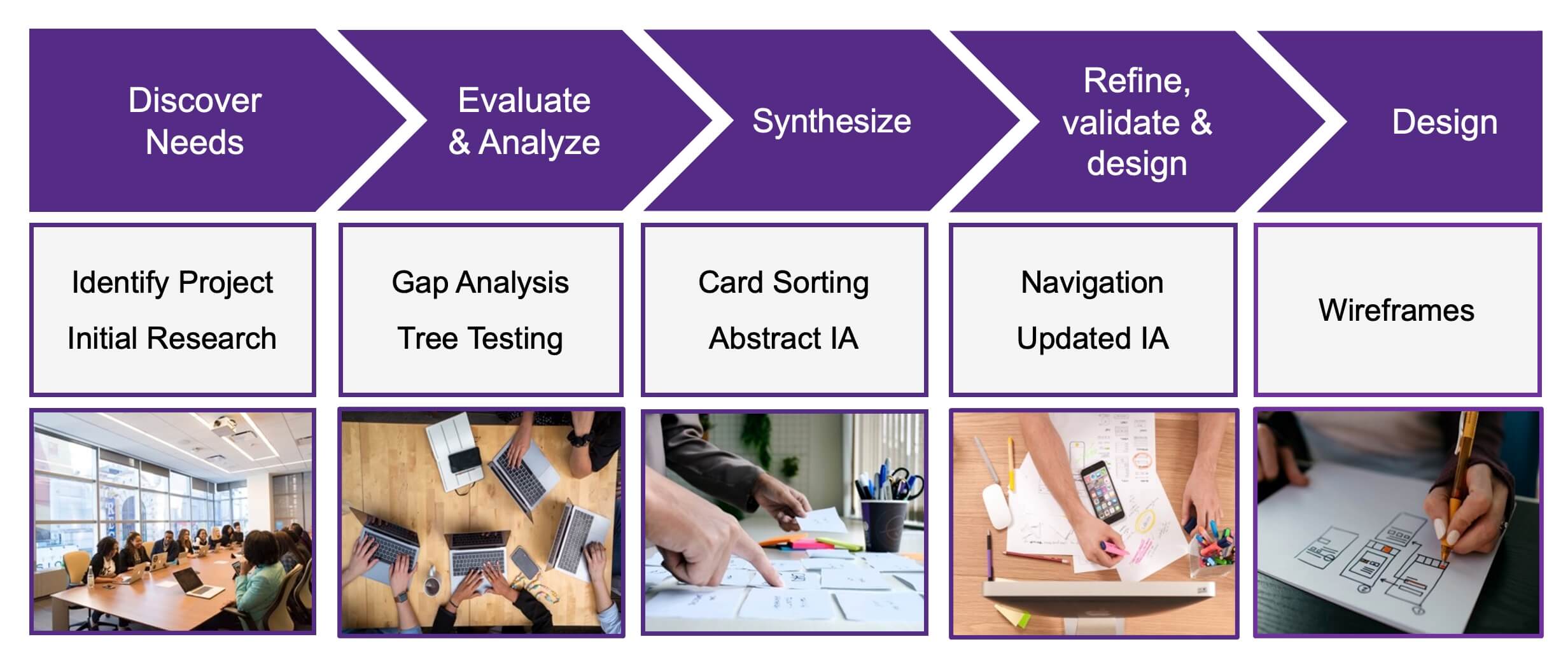
This project was structured into five distinct phases, all aimed at redesigning the Information Architecture of craigslist. The first phase, Discovery Needs, focused on identifying the project scope and conducting initial research. In the Evaluate & Analyze phase, I performed a gap analysis and tree testing to uncover key insights. Then, in the Synthesize phase, I conducted card sorting exercises and developed the abstract IA. The Refine, Validate & Design phase involved refining the navigation and updating the IA to improve the overall user experience. Finally, in the Design phase, I created wireframes to visualize the new structure.
Business Goal
i.e., “Provide a competitive, simple, honest and realistic alternative, either low-cost or free, to classified ads.”
Task
i.e., "Create a job opening for your company"
Business Priority
Low, Medium, or High
Business Goal
i.e., “Provide a competitive, simple, honest and realistic alternative, either low-cost or free, to classified ads.”
Task
i.e., "Create a job opening for your company"
Business Priority
Low, Medium, or High
Business Goals
Connect communities that are nearby or share specific areas of interest.
Provide a competitive, simple, and transparent alternative, either low-cost or free, to classified ads.
Focus on users rather than profitability.
Adapt to any changes in customer needs or legal requirements when needed.
Reach a wide audience via internet.
Protect users from illegal, fraudulent, or potentially dangerous listings on the website.
Tasks & Business Priority
High
Flag a post
Search for housing rentals
Search job listings
Hire a resume writer
Search for something you need
Look for part-time gigs
Create a job opening for your company
Set your preferred city/location/country
Mark a post as a favorite
Check your favorite posts
Advertise a service
Medium
Change your language
Change locations
Reset your password
Log in to your account
Create an account
Check the event calendar
Re-post a post
Low
Participate in a forum
Pay for a post
Read the Terms of Use
Download the Craigslist app
Learn about Craigslist
Read “Best of” craigslist posts
Browse jobs to work for
Craigslist
Business Goals
Connect communities that are nearby or share specific areas of interest.
Provide a competitive, simple, and transparent alternative, either low-cost or free, to classified ads.
Focus on users rather than profitability.
Adapt to any changes in customer needs or legal requirements when needed.
Reach a wide audience via internet.
Protect users from illegal, fraudulent, or potentially dangerous listings on the website.
Tasks & Business Priority
High
Flag a post
Search for housing rentals
Search job listings
Hire a resume writer
Search for something you need
Look for part-time gigs
Create a job opening for your company
Set your preferred city/location/country
Mark a post as a favorite
Check your favorite posts
Advertise a service
Medium
Change your language
Change locations
Reset your password
Log in to your account
Create an account
Check the event calendar
Re-post a post
Low
Participate in a forum
Pay for a post
Read the Terms of Use
Download the Craigslist app
Learn about Craigslist
Read “Best of” craigslist posts
Browse jobs to work for
Craigslist
Then, I developed two UX Personas. First, there is Joe, who is looking to create a comfortable home office. And meet Sophia, who needs a simple way to post a room for rent online.
Joe "The Conscious Teleworker"
35 • Single • Programmer • San Francisco, CA
“I want to have a comfortable office space without spending a lot of money or creating waste.”
Sophia "The Practical Student"
20 • Single • Full-Time Student • Berkeley, CA
“I need an easy way to advertise a room for rent online once my friend moves out of our apartment”
Joe "The Conscious Teleworker"
35 • Single • Programmer • San Francisco, CA
“I want to have a comfortable office space without spending a lot of money or creating waste.”
Sophia "The Practical Student"
20 • Single • Full-Time Student • Berkeley, CA
“I need an easy way to advertise a room for rent online once my friend moves out of our apartment”
Discovery Needs
My first step was to establish the business goals for craigslist. Next, I pinpointed tasks that could be carried out on the website based on the business goals. Finally, I prioritized each task based on its business importance.
Evaluate & Analize
Gap Analysis
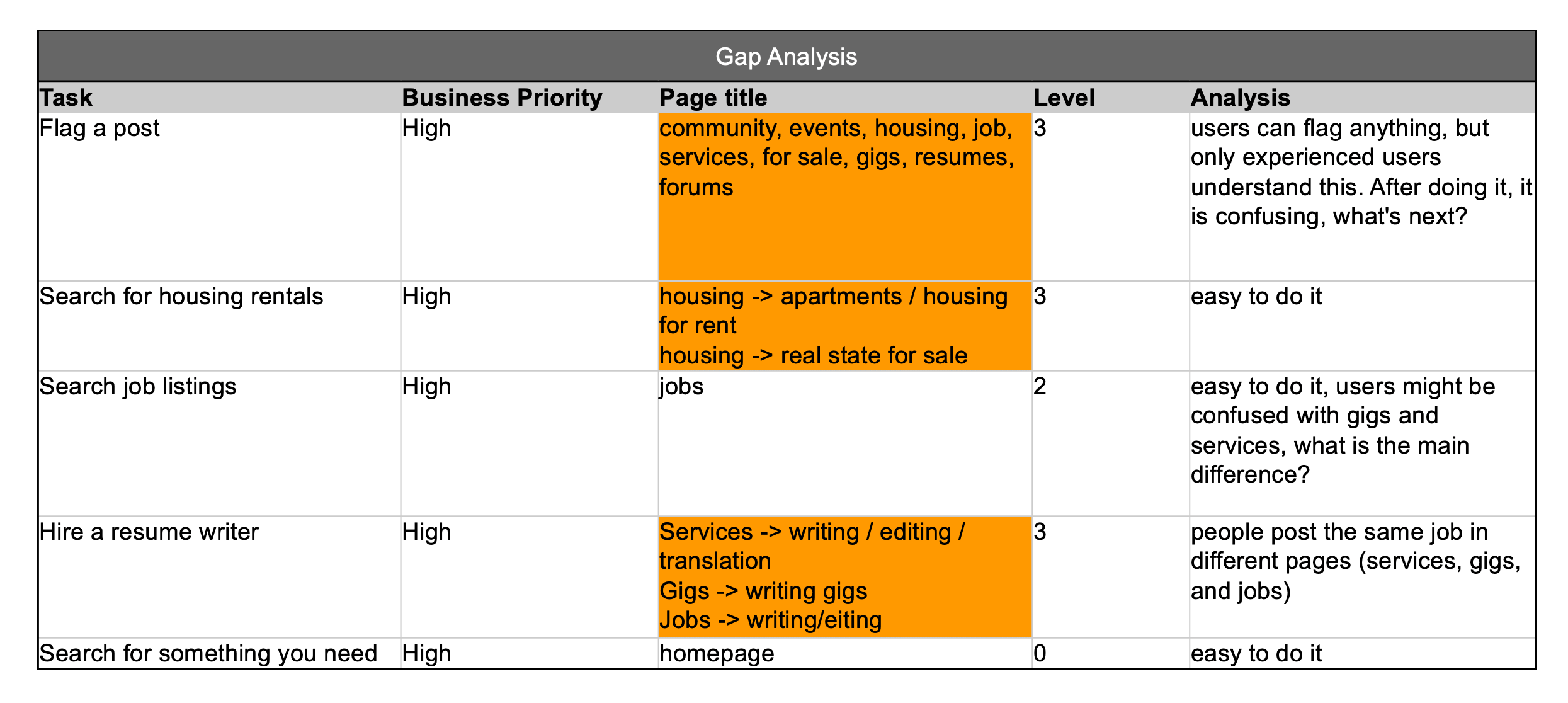
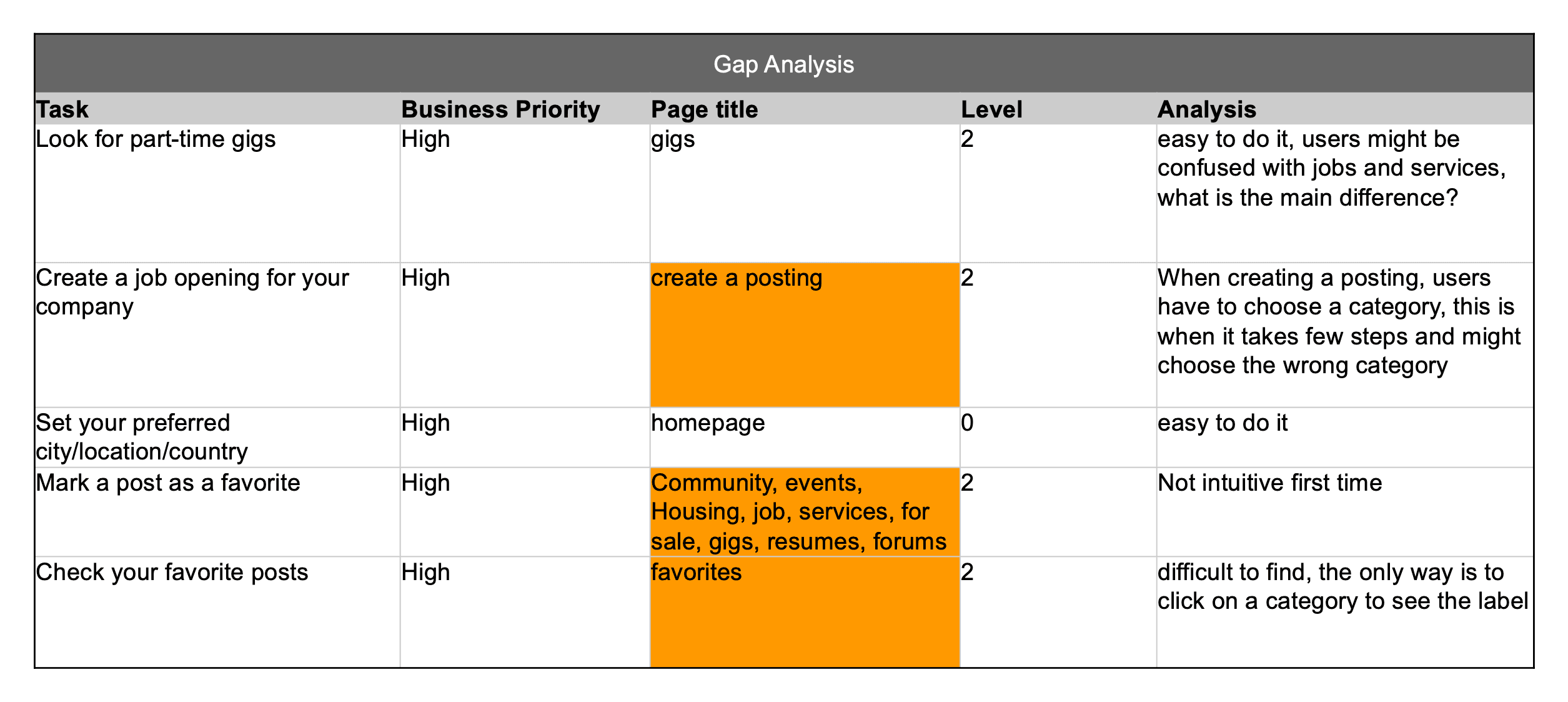
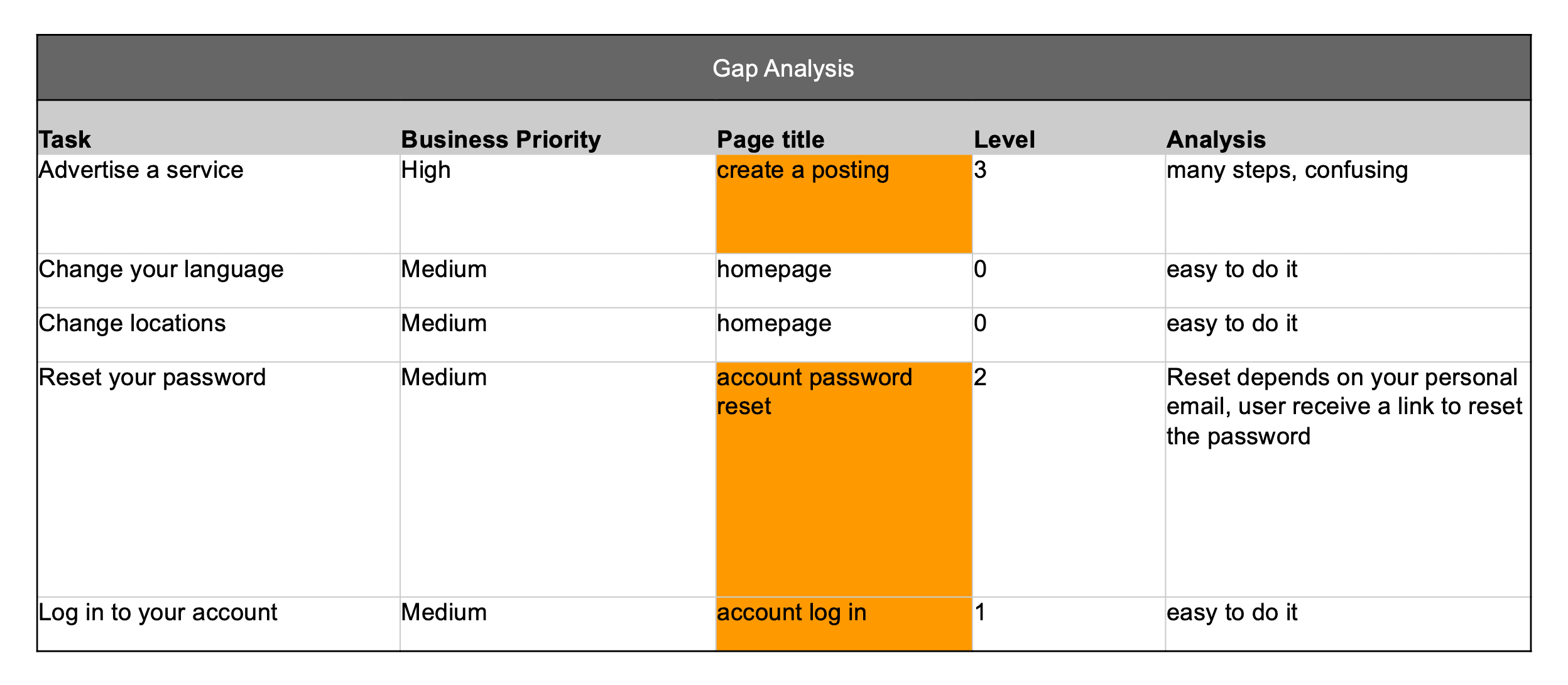
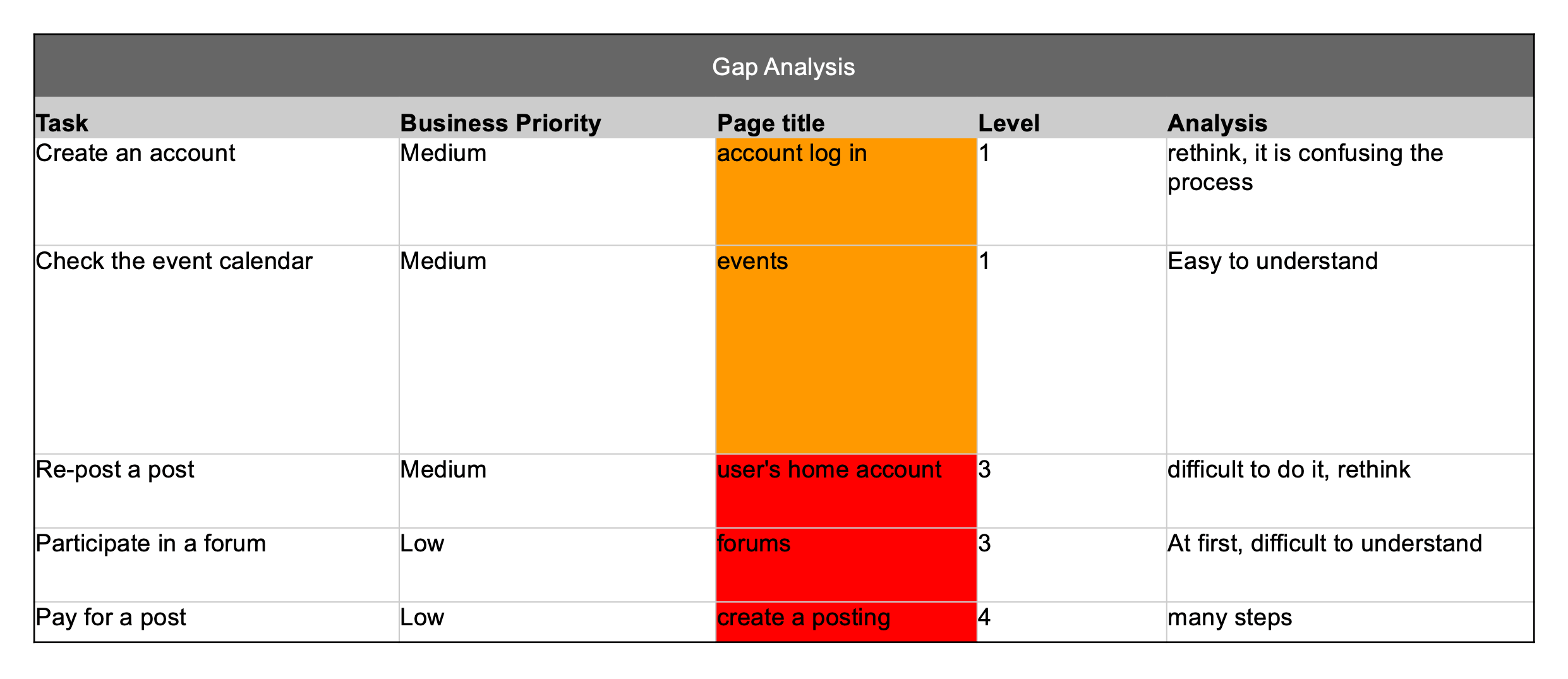
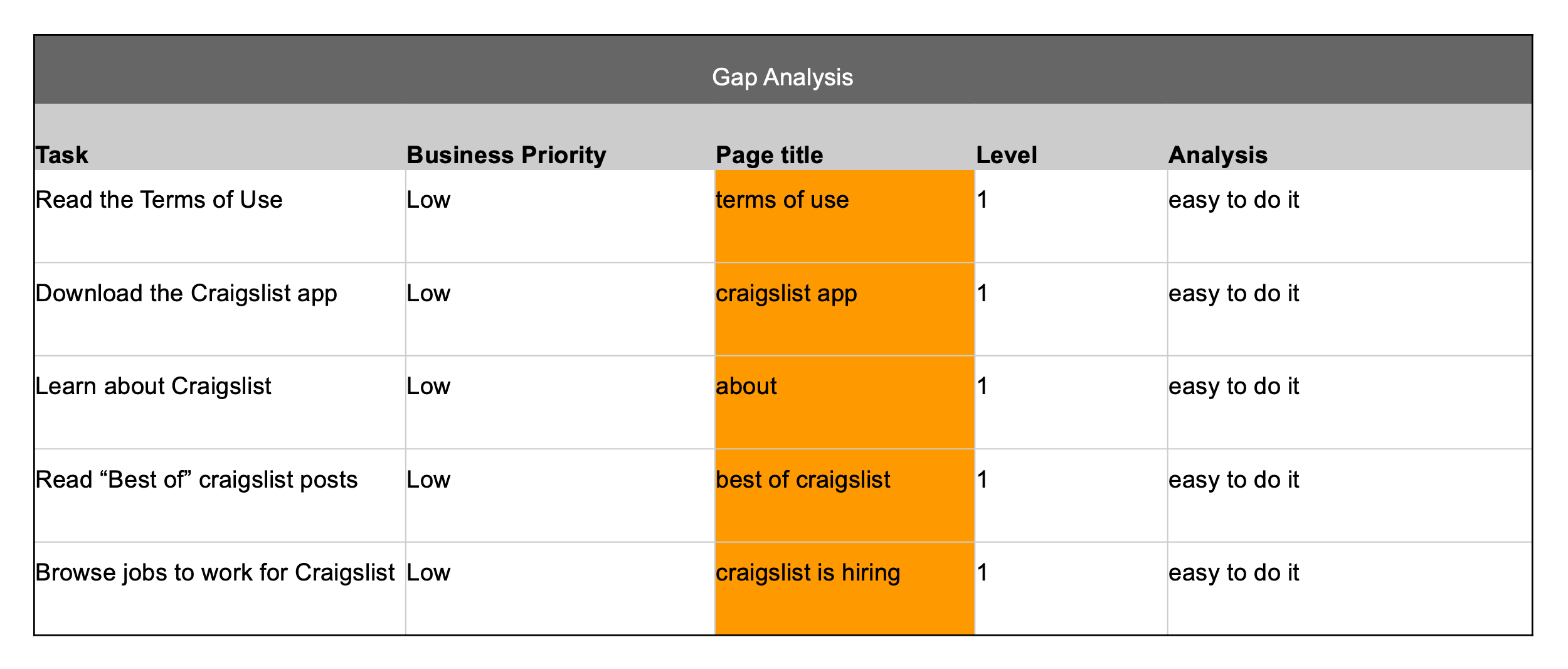
I began this phase by conducting aGap Analysis of each task, which revealed three key findings. First, the navigation is time-consuming and lacks intuitiveness. Second, users often struggle with posting or searching for ads under the correct categories. Lastly, the existing structure does not align with the business priorities, impacting the overall user experience.
Tree Testing
Next, I conducted a Tree Testing study of the current IA of craigslit. Six participants worked through 10 scenarios previously created based on user’s tasks that were previously identified. The key findings from this study were concerning.
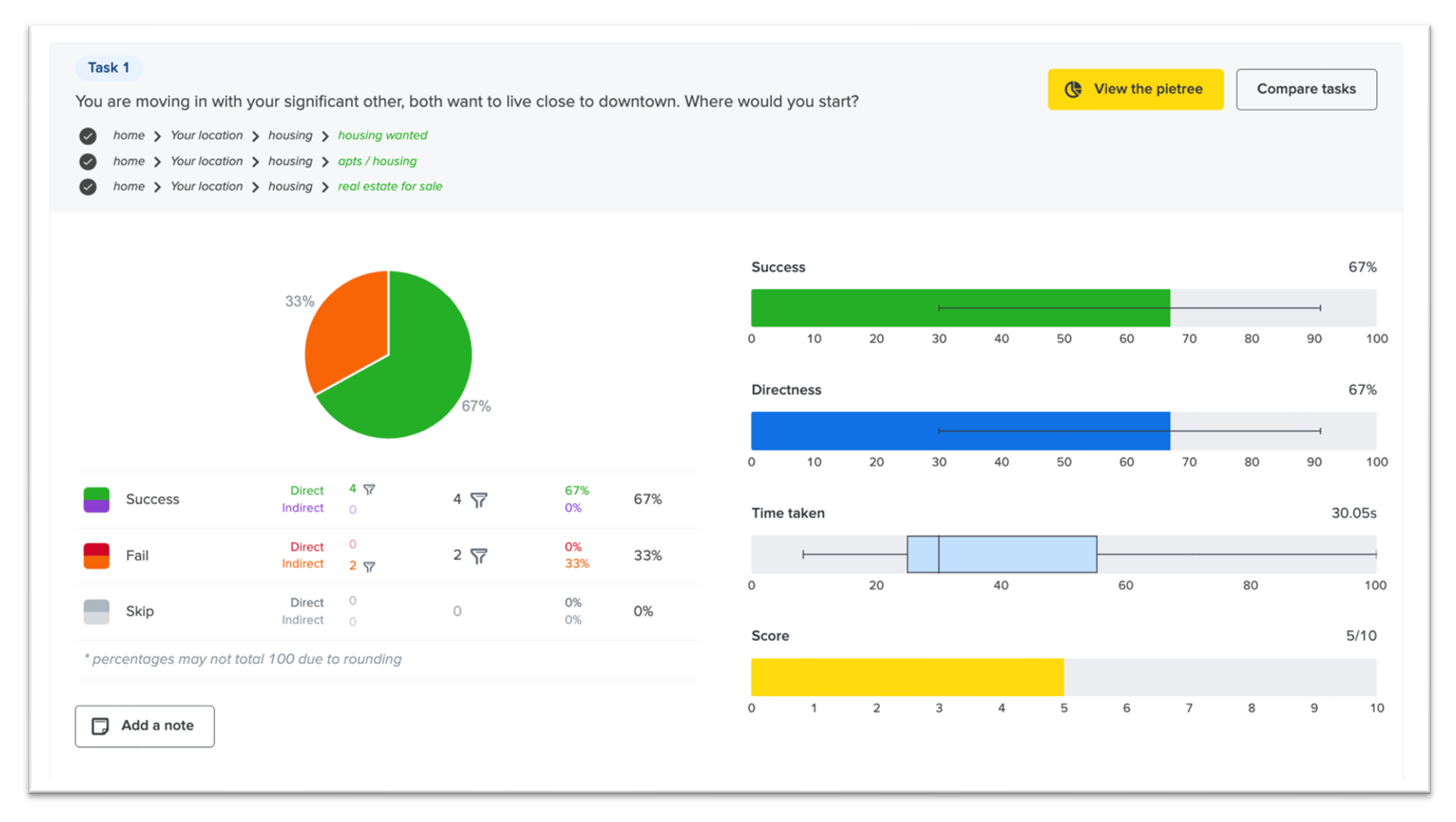
With a 67% success score and 67% directness, most participants were able to locate the correct category without detours, suggesting that the information architecture is generally understandable but not fully intuitive. The average completion time of 30.05 seconds points to some hesitation or cognitive effort in navigating the structure. An overall score of 5/10 highlights that while the path is discoverable, the category labels or hierarchy likely need refinement to improve clarity, reduce search time, and increase confidence for users seeking rental listings.
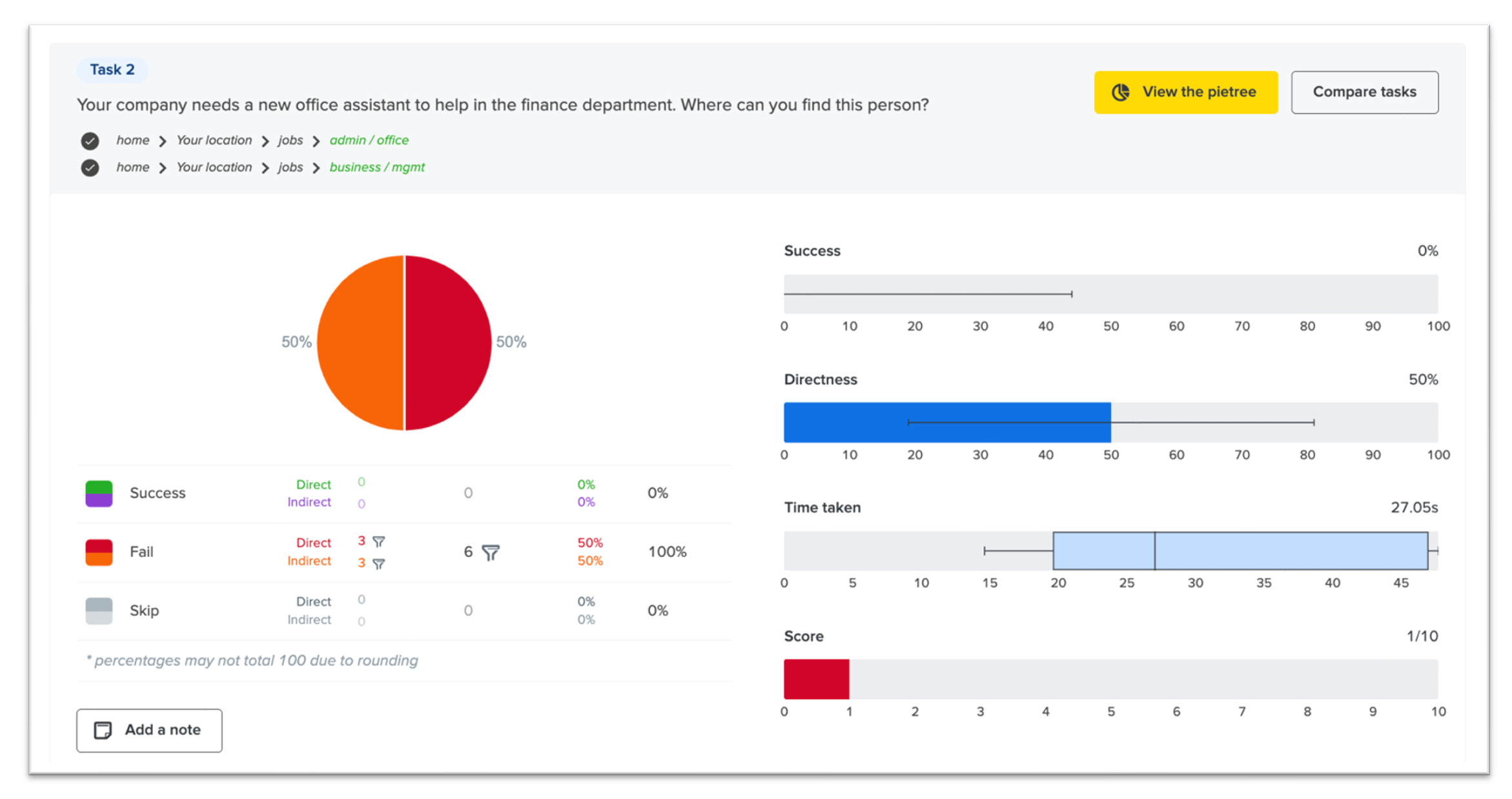
With a 0% success rate, participants were unable to locate the correct category, indicating that the current structure and labeling do not align with user expectations. Although directness was 50%, suggesting some users followed a logical path, the 27.05-second completion time reflects confusion and trial-and-error navigation. The overall score of 1/10 highlights a severe findability problem, signaling the need for restructuring job-related categories, improving terminology, and aligning navigation with users’ mental models to ensure job listings are easily discoverable.
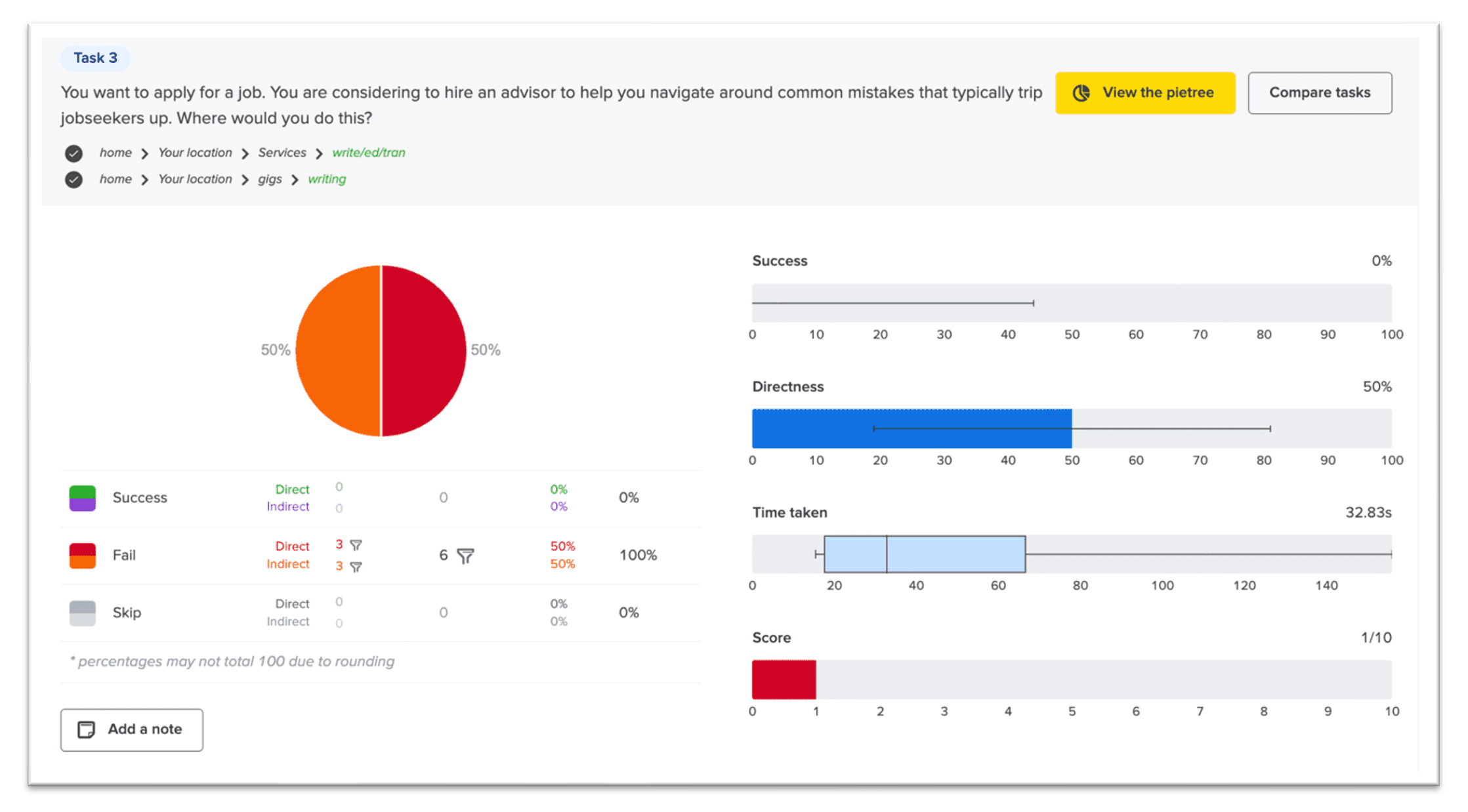
A 0% success score shows that participants could not find the correct category, indicating a mismatch between the site structure and user expectations. While the 50% directness suggests some users followed a seemingly logical path, the long average time of 32.83 seconds reflects uncertainty and repeated navigation attempts. An overall score of 1/10 signals a critical need to rethink category placement and labeling, ensuring professional services like resume writing are clearly grouped and aligned with how users conceptualize job-related support.
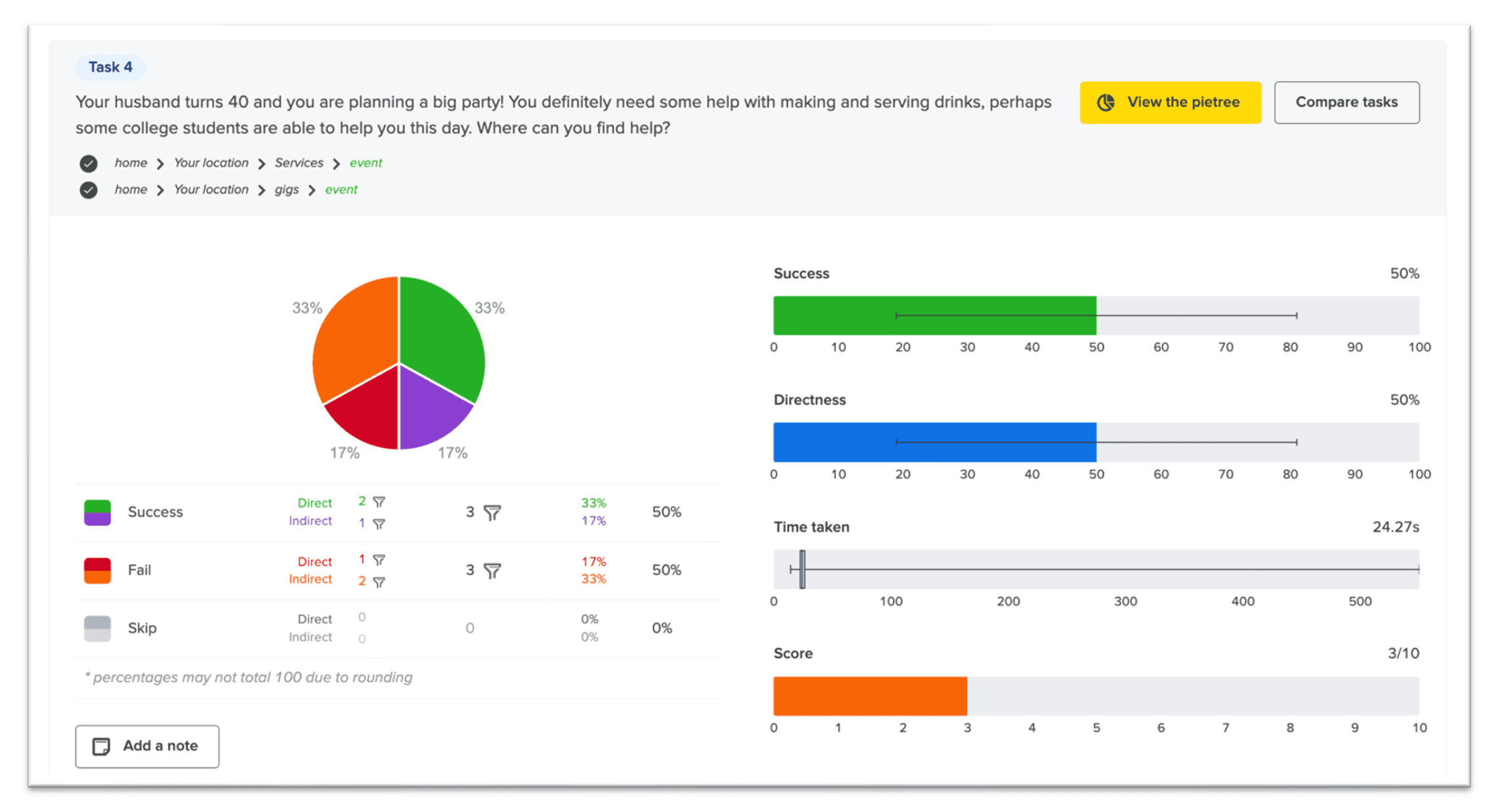
A 50% success rate and 50% directness indicate that only half of the participants were able to find the correct category, and many took indirect paths, suggesting ambiguity in the navigation structure or labeling. The average completion time of 24.27 seconds points to hesitation and cognitive effort during navigation. With an overall score of 3/10, the findings suggest that part-time opportunities are not clearly differentiated or prioritized in the hierarchy, and clearer categorization and terminology are needed to improve findability and user confidence.
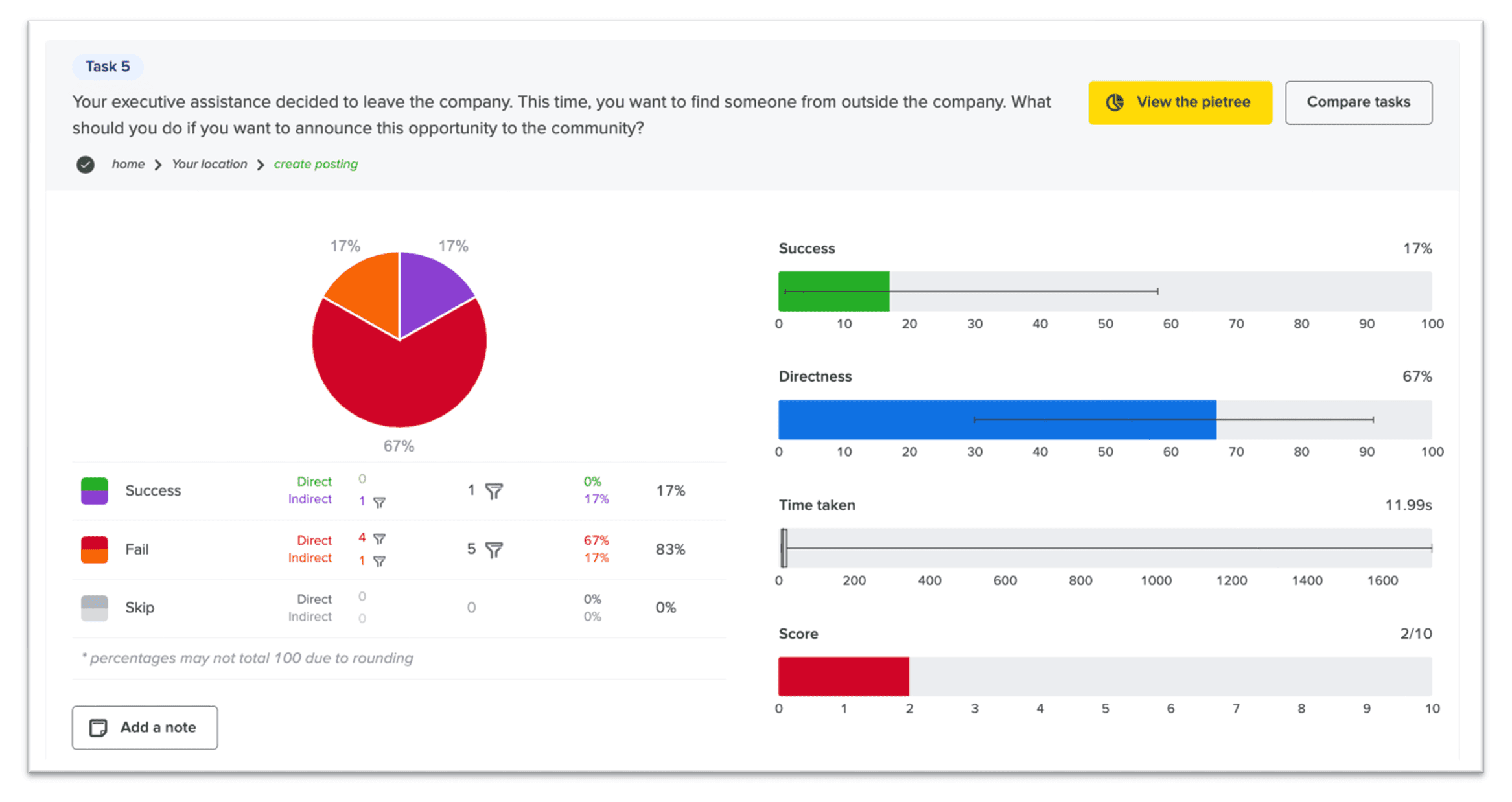
With only a 17% success rate, most participants failed to locate the correct category, suggesting a misalignment between the site’s structure and employers’ mental models. However, the 67% directness and short completion time of 11.99 seconds imply that users who did choose a path did so confidently, but toward an incorrect location—pointing to misleading labels or category placement. An overall score of 2/10 highlights the need to better distinguish employer-focused actions from job-seeker content and clarify terminology to improve findability for companies posting roles.
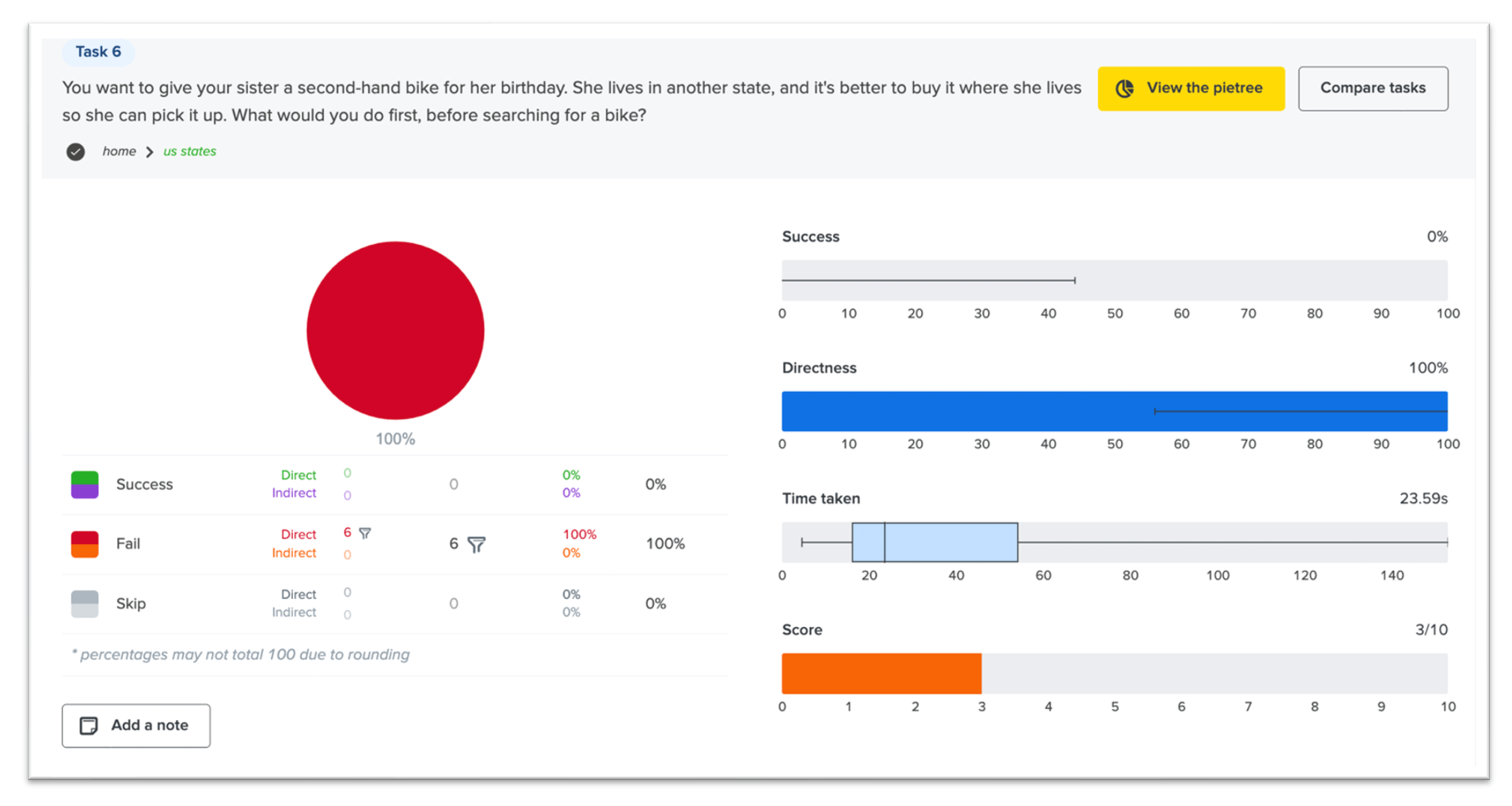
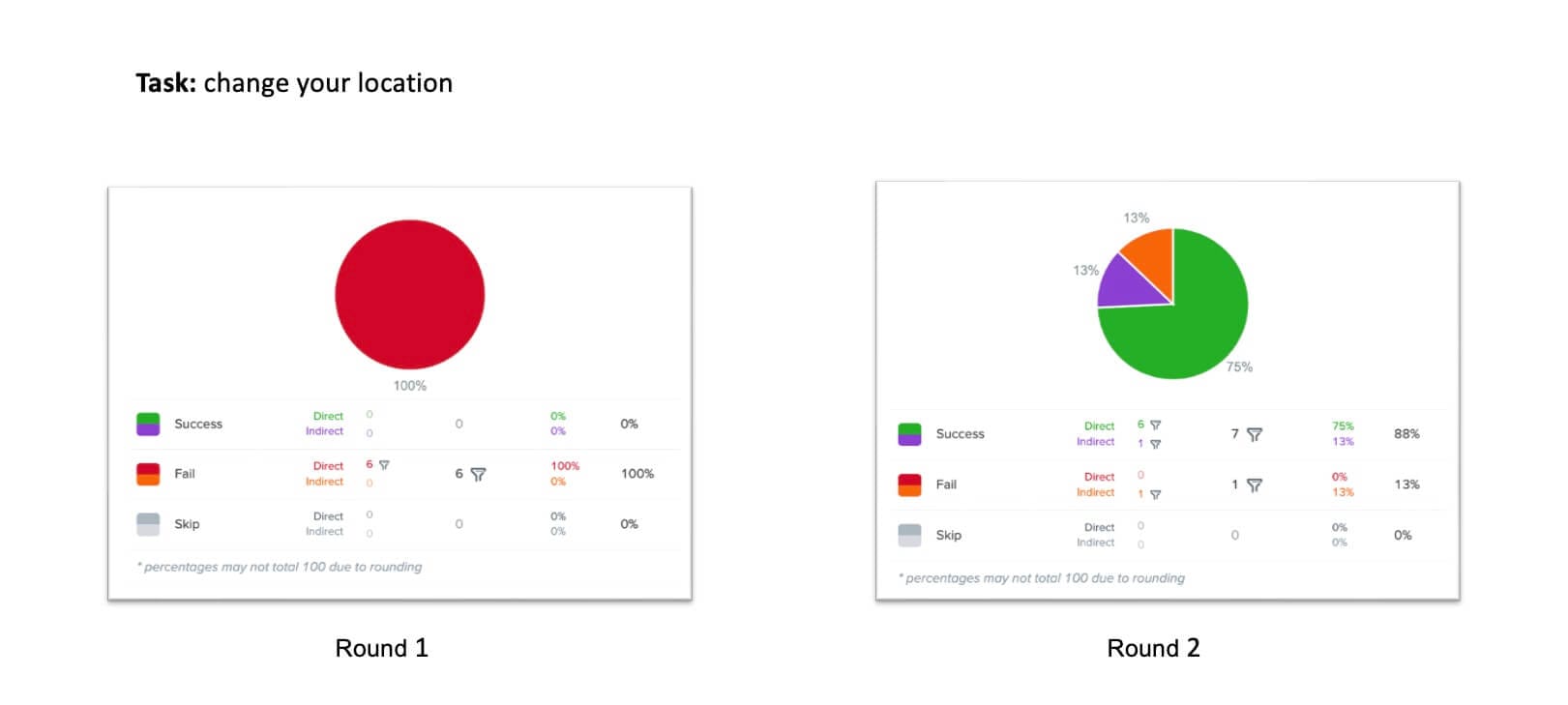
With a 0% success score, participants were unable to find the correct location-setting option, indicating that this feature is either poorly labeled or placed in an unexpected section. The 100% directness suggests that users followed a consistent, logical path, but to the wrong destination—highlighting misleading terminology or hierarchy. The 23.59-second completion time reflects hesitation and uncertainty, and the overall score of 3/10 underscores the need to reposition location settings and use clearer, more intuitive labels aligned with common UX conventions (e.g., “Preferences” or “Location Filters”).
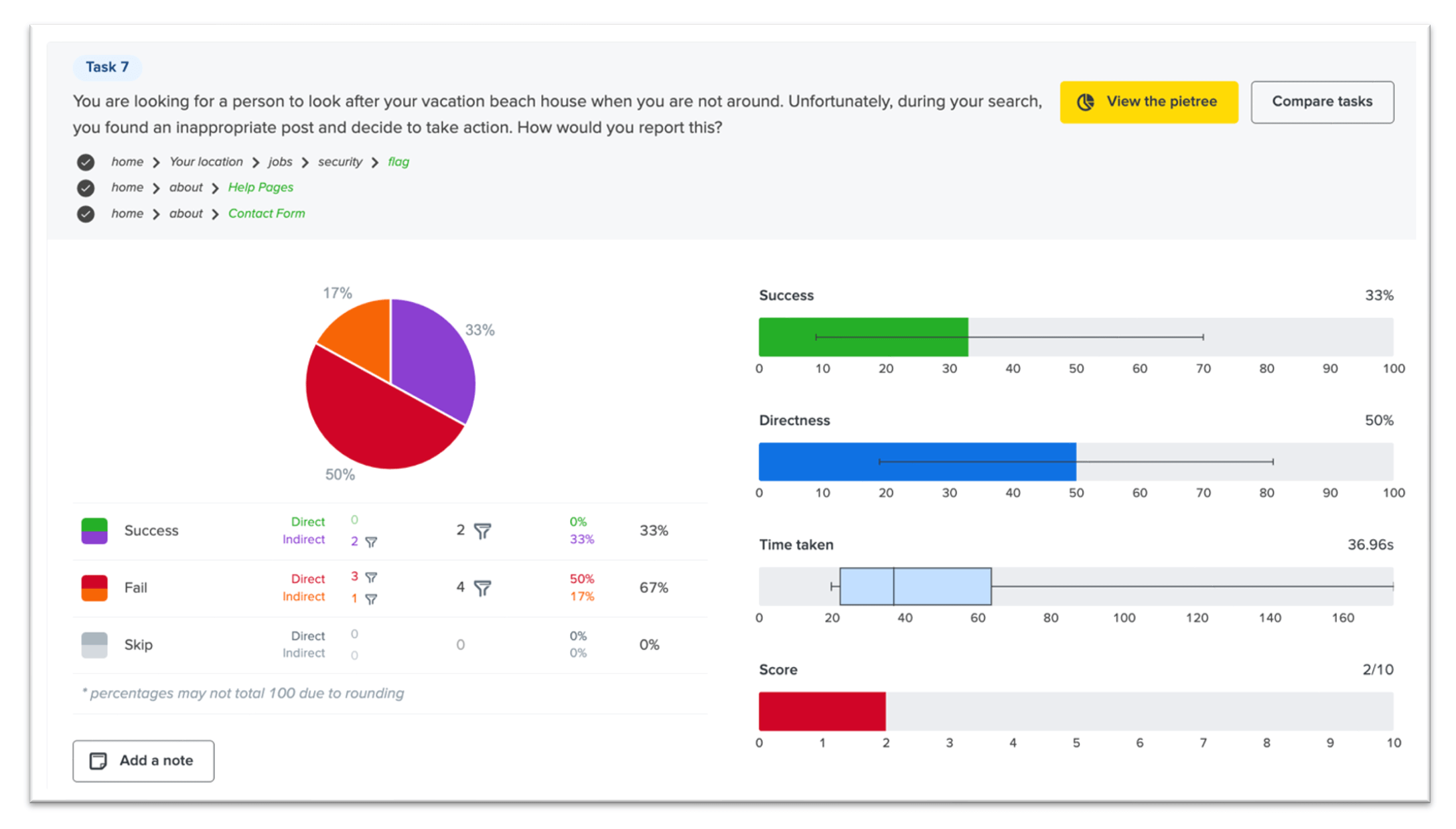
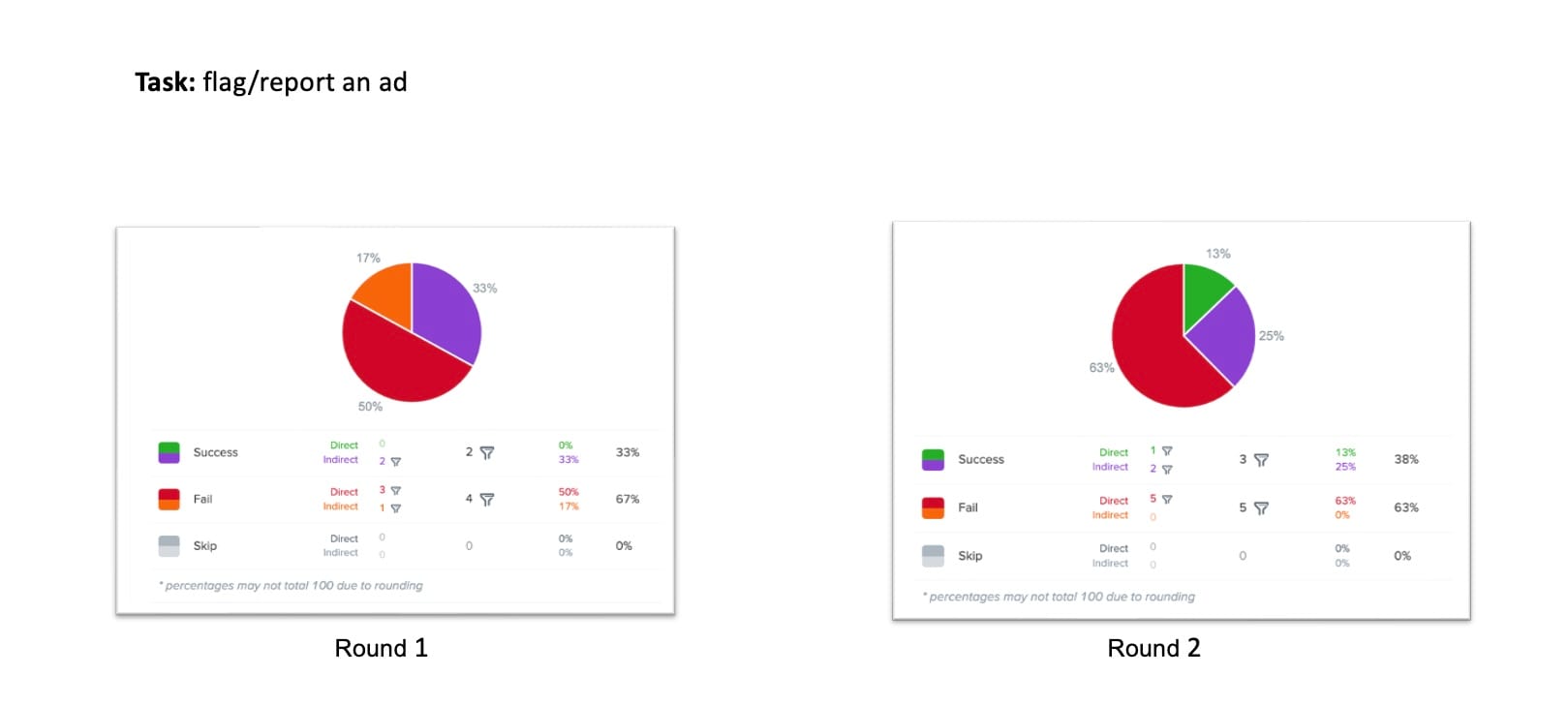
With a 33% success rate and 50% directness, most participants struggled to locate the reporting function and often navigated through incorrect paths. The long average completion time of 36.96 seconds suggests uncertainty and repeated attempts to find the right category. An overall score of 2/10 highlights that moderation and safety actions are not intuitively placed in the hierarchy, suggesting a need for clearer labeling (e.g., “Report” or “Safety & Trust”) and more prominent placement aligned with common user expectations for content reporting features.
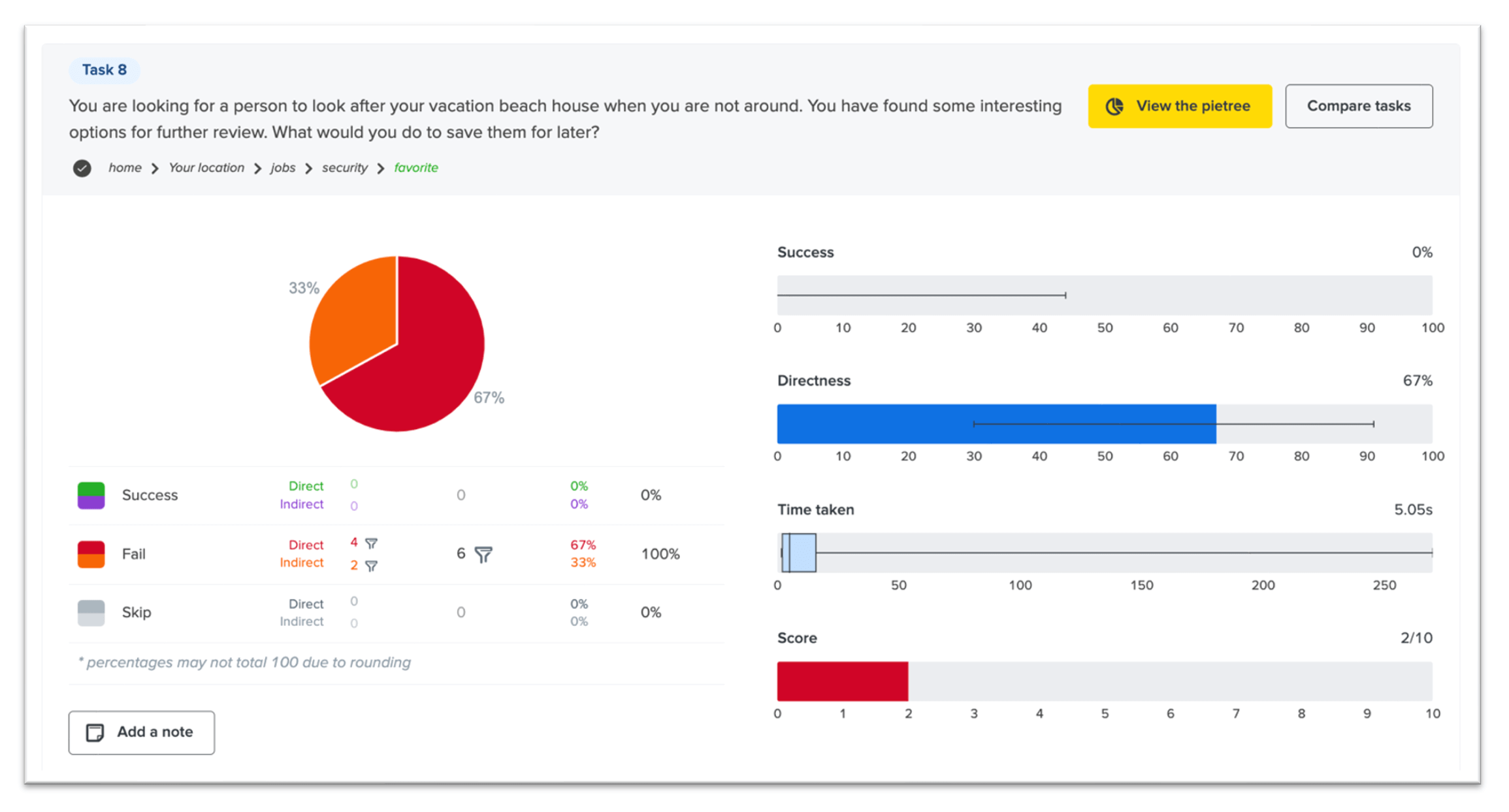
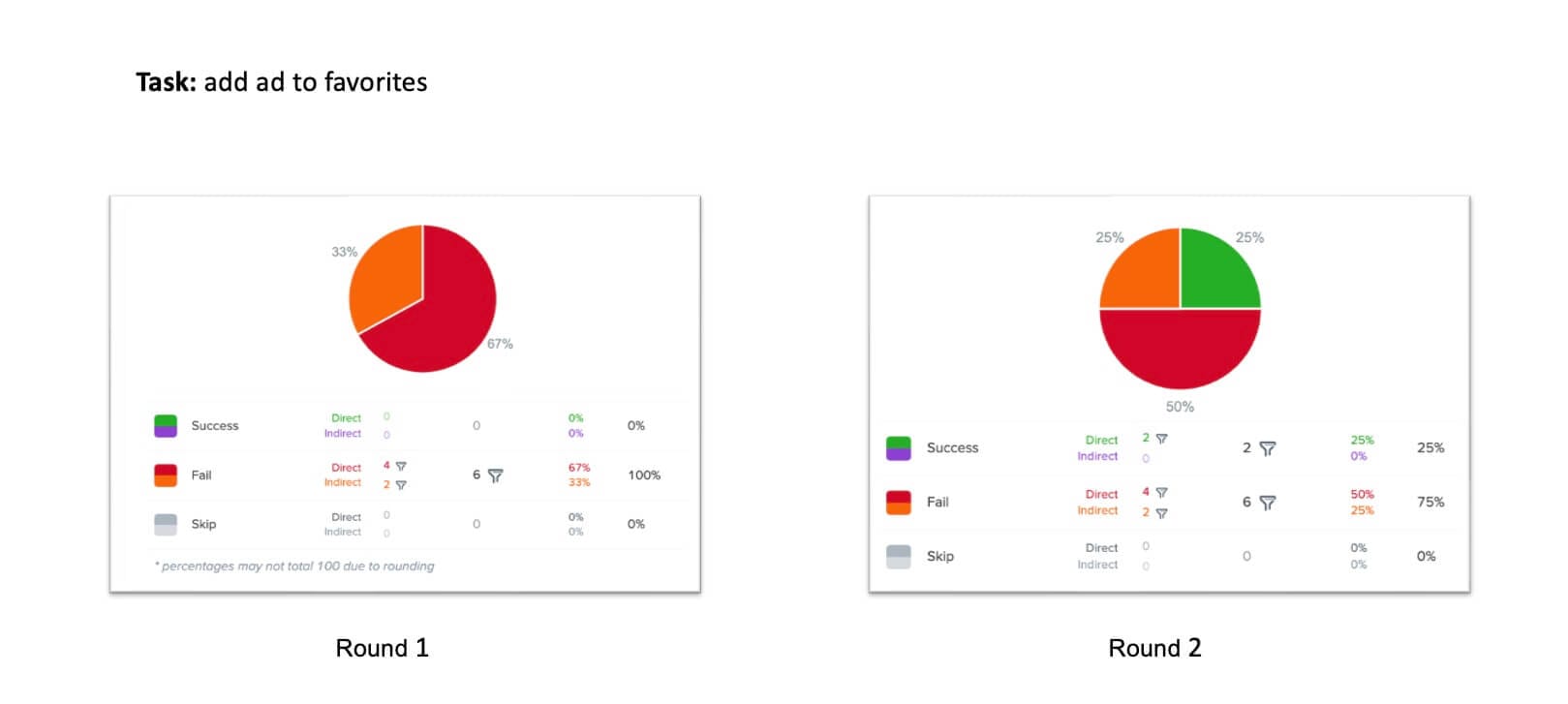
The 67% directness and very short completion time (5.05 seconds) imply that users confidently chose an expected path, but the structure did not match their mental model—pointing to misleading labels or missing affordances. With an overall score of 2/10, the findings highlight the need to better surface saving or bookmarking features through clearer terminology (e.g., “Saved” or “Bookmarks”) and placement consistent with common platform conventions.
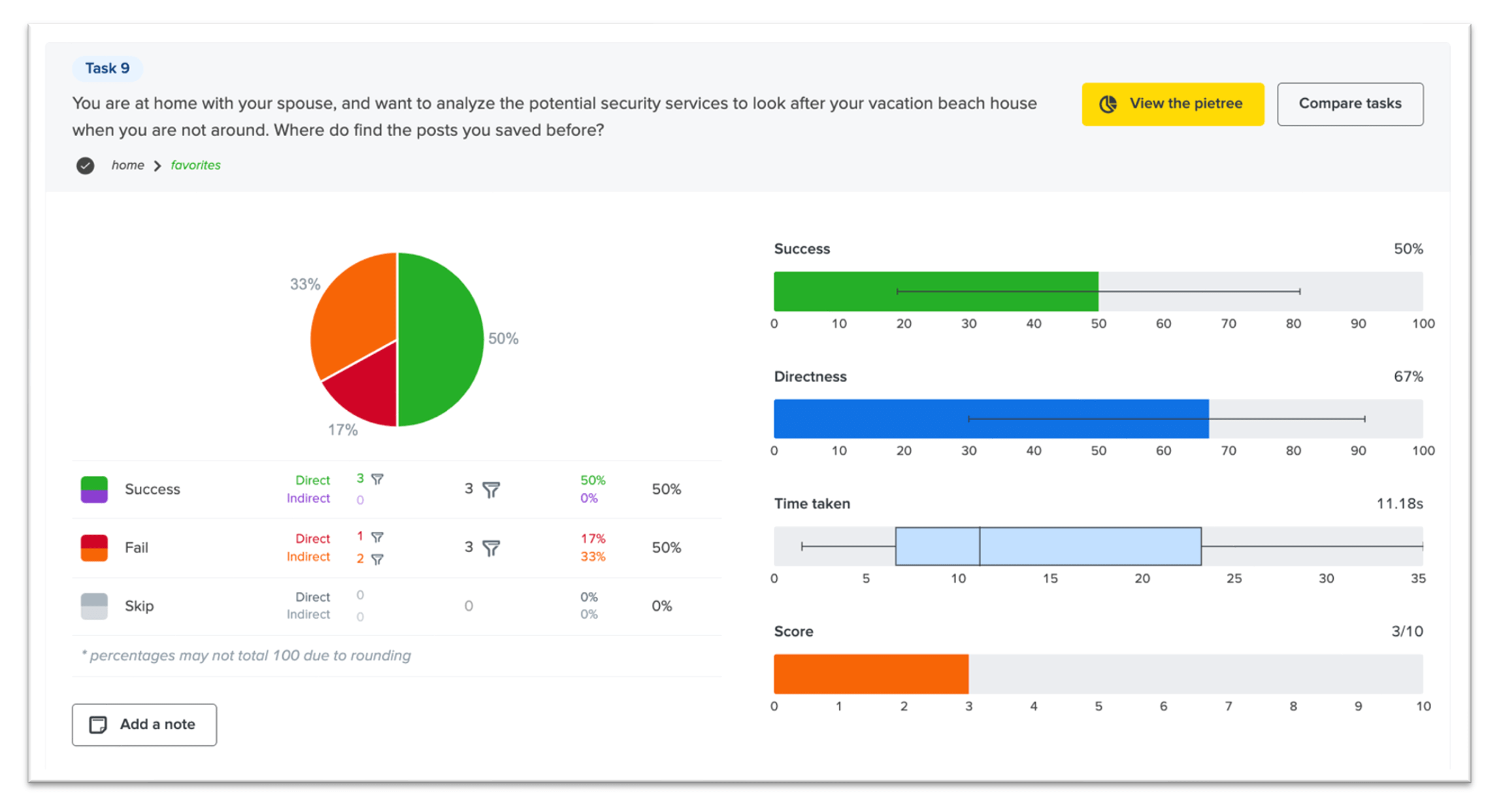
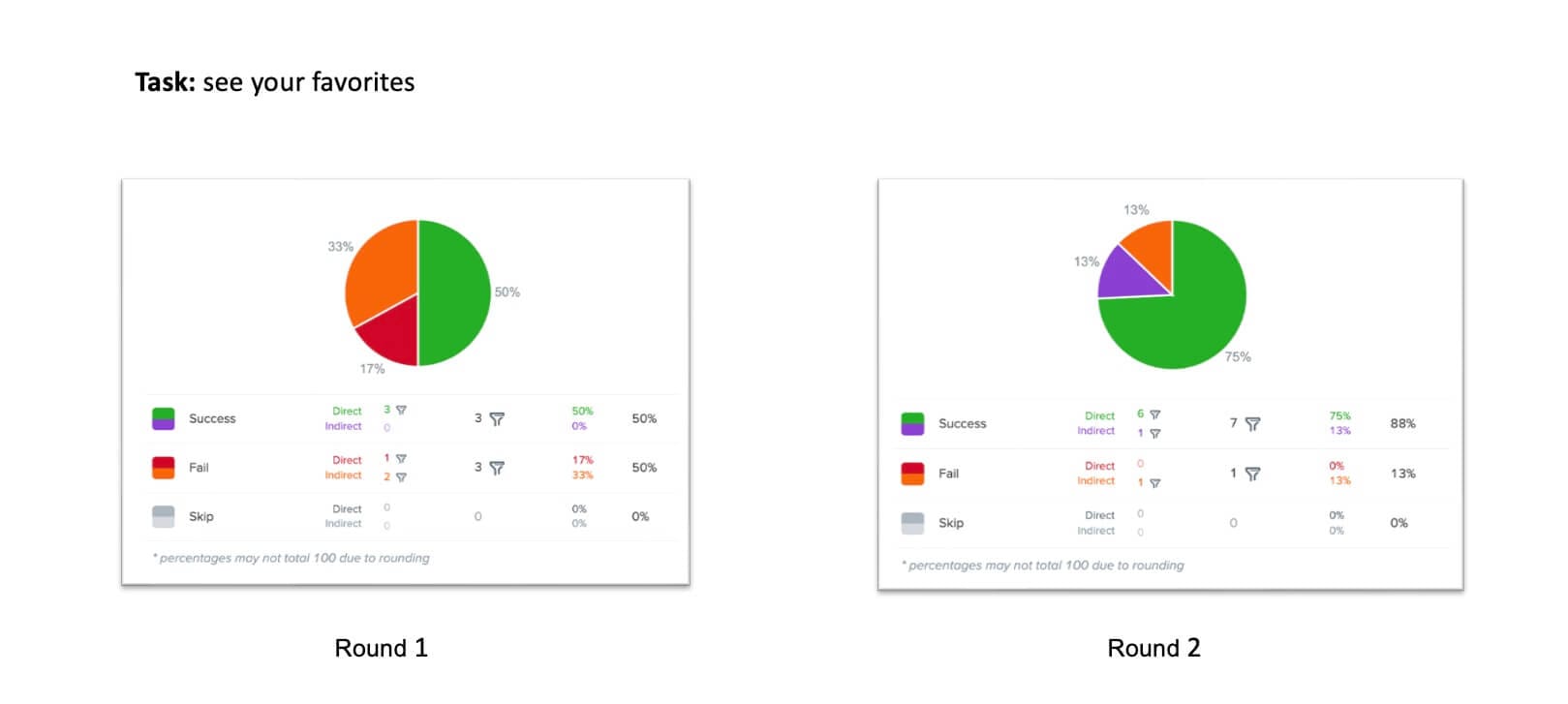
A 50% success rate indicates that only half of participants could locate saved content, while the 67% directness suggests that those who succeeded generally followed an intuitive path. The relatively short completion time of 11.18 seconds implies low cognitive load once users identified a plausible location, but the overall score of 3/10 highlights inconsistency in how favorites are categorized or labeled. These findings suggest an opportunity to standardize terminology (e.g., “Saved” or “Bookmarks”) and place this feature in a clearly expected area, such as user profiles or account settings, to improve findability and user confidence.
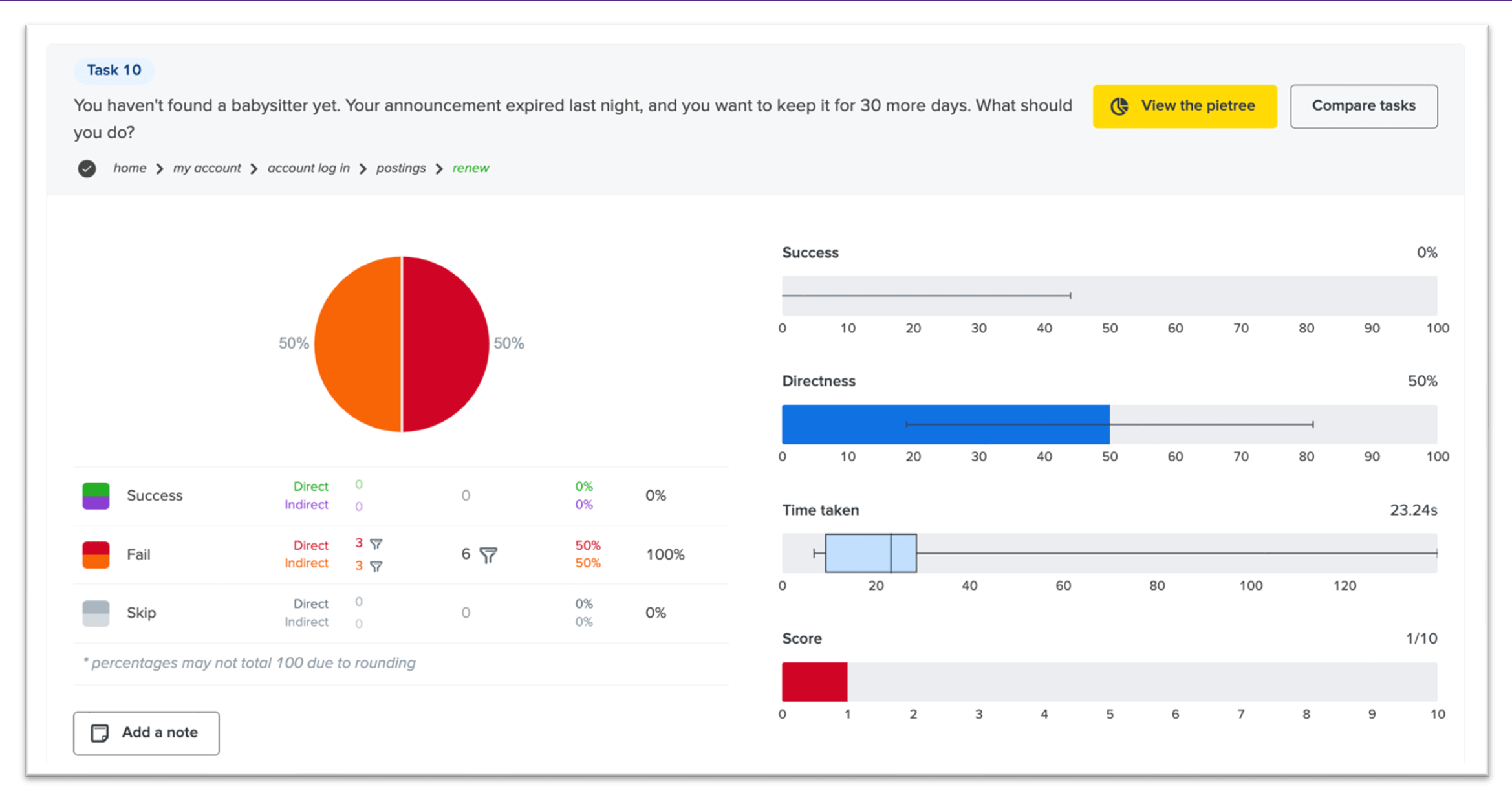
A 0% success score indicates that participants were unable to find where to re-post content, suggesting that sharing actions are either missing from the navigation hierarchy or labeled in ways that don’t match user expectations. The 50% directness and 23.24-second completion time reflect uncertainty and trial-and-error navigation. An overall score of 1/10 highlights the need to clearly define and surface sharing-related actions (e.g., “Share” or “Re-post”) in intuitive, conventionally recognized locations to support content engagement.
With a 67% success score and 67% directness, most participants were able to locate the correct category without detours, suggesting that the information architecture is generally understandable but not fully intuitive. The average completion time of 30.05 seconds points to some hesitation or cognitive effort in navigating the structure. An overall score of 5/10 highlights that while the path is discoverable, the category labels or hierarchy likely need refinement to improve clarity, reduce search time, and increase confidence for users seeking rental listings.
With a 0% success rate, participants were unable to locate the correct category, indicating that the current structure and labeling do not align with user expectations. Although directness was 50%, suggesting some users followed a logical path, the 27.05-second completion time reflects confusion and trial-and-error navigation. The overall score of 1/10 highlights a severe findability problem, signaling the need for restructuring job-related categories, improving terminology, and aligning navigation with users’ mental models to ensure job listings are easily discoverable.
A 0% success score shows that participants could not find the correct category, indicating a mismatch between the site structure and user expectations. While the 50% directness suggests some users followed a seemingly logical path, the long average time of 32.83 seconds reflects uncertainty and repeated navigation attempts. An overall score of 1/10 signals a critical need to rethink category placement and labeling, ensuring professional services like resume writing are clearly grouped and aligned with how users conceptualize job-related support.
A 50% success rate and 50% directness indicate that only half of the participants were able to find the correct category, and many took indirect paths, suggesting ambiguity in the navigation structure or labeling. The average completion time of 24.27 seconds points to hesitation and cognitive effort during navigation. With an overall score of 3/10, the findings suggest that part-time opportunities are not clearly differentiated or prioritized in the hierarchy, and clearer categorization and terminology are needed to improve findability and user confidence.
With only a 17% success rate, most participants failed to locate the correct category, suggesting a misalignment between the site’s structure and employers’ mental models. However, the 67% directness and short completion time of 11.99 seconds imply that users who did choose a path did so confidently, but toward an incorrect location—pointing to misleading labels or category placement. An overall score of 2/10 highlights the need to better distinguish employer-focused actions from job-seeker content and clarify terminology to improve findability for companies posting roles.
With a 0% success score, participants were unable to find the correct location-setting option, indicating that this feature is either poorly labeled or placed in an unexpected section. The 100% directness suggests that users followed a consistent, logical path, but to the wrong destination—highlighting misleading terminology or hierarchy. The 23.59-second completion time reflects hesitation and uncertainty, and the overall score of 3/10 underscores the need to reposition location settings and use clearer, more intuitive labels aligned with common UX conventions (e.g., “Preferences” or “Location Filters”).
With a 33% success rate and 50% directness, most participants struggled to locate the reporting function and often navigated through incorrect paths. The long average completion time of 36.96 seconds suggests uncertainty and repeated attempts to find the right category. An overall score of 2/10 highlights that moderation and safety actions are not intuitively placed in the hierarchy, suggesting a need for clearer labeling (e.g., “Report” or “Safety & Trust”) and more prominent placement aligned with common user expectations for content reporting features.
The 67% directness and very short completion time (5.05 seconds) imply that users confidently chose an expected path, but the structure did not match their mental model—pointing to misleading labels or missing affordances. With an overall score of 2/10, the findings highlight the need to better surface saving or bookmarking features through clearer terminology (e.g., “Saved” or “Bookmarks”) and placement consistent with common platform conventions.
A 50% success rate indicates that only half of participants could locate saved content, while the 67% directness suggests that those who succeeded generally followed an intuitive path. The relatively short completion time of 11.18 seconds implies low cognitive load once users identified a plausible location, but the overall score of 3/10 highlights inconsistency in how favorites are categorized or labeled. These findings suggest an opportunity to standardize terminology (e.g., “Saved” or “Bookmarks”) and place this feature in a clearly expected area, such as user profiles or account settings, to improve findability and user confidence.
A 0% success score indicates that participants were unable to find where to re-post content, suggesting that sharing actions are either missing from the navigation hierarchy or labeled in ways that don’t match user expectations. The 50% directness and 23.24-second completion time reflect uncertainty and trial-and-error navigation. An overall score of 1/10 highlights the need to clearly define and surface sharing-related actions (e.g., “Share” or “Re-post”) in intuitive, conventionally recognized locations to support content engagement.
Success
Directness measured whether users reached the correct destination via the most intuitive path. Tasks like flagging posts, marking favorites, and browsing gigs (67%) were relatively direct, but searching jobs, hiring a resume writer, setting location, and reposting listings (50%) showed frequent hesitation or backtracking.
These results highlighted a mismatch between Craigslist’s category structure and users’ mental models. The platform’s IA supports content discovery but fails to support user workflows, which creates friction for both casual users and frequent contributors.
Directness
Directness measured whether users reached the correct destination via the most intuitive path. Tasks like flagging posts, marking favorites, and browsing gigs (67%) were relatively direct, but searching jobs, hiring a resume writer, setting location, and reposting listings (50%) showed frequent hesitation or backtracking.
Overall, the results revealed that while parts of the IA were understandable, the hierarchy and labels lacked clarity and consistency. These insights informed the redesign by introducing clearer task-based categories, improving labeling, and restructuring user action flows to reduce navigation friction and improve confidence.
Time Taken
Time-on-task highlighted efficiency gaps. Simple, familiar actions such as marking favorites (5s) and checking saved posts (11s) were completed quickly. In contrast, complex or poorly labeled tasks like setting location (37s), searching job listings (33s), and flagging posts (30s) took significantly longer.
Overall, the results showed that while some features were easy to access, the IA structure slowed users down for critical workflows. These insights informed the redesign by simplifying category hierarchy, clarifying labels, and introducing clearer pathways for user actions and settings to reduce task time and improve navigation efficiency.
Overall Score
When combining accuracy, directness, and efficiency into an overall score, most tasks performed poorly, ranging from 1/10 to 5/10. Only flagging a post (5/10) achieved moderate results, while searching housing or job listings, reposting, and managing location (1–3/10) were near failure.
These results indicate a systemic mismatch between the IA structure and users’ expectations, with users struggling to locate key actions and content efficiently. There is a systemic misalignment between Craigslist’s structure and user expectations, with navigation, labeling, and category grouping causing major usability issues.
Actionable Next Steps
The tree testing results indicate that Craigslist’s information architecture needs a clear, task-focused redesign. Key actions include reorganizing categories to align with user intent, clarifying labels, and creating dedicated areas for account and action-based tasks such as posting, saving, and setting location. Additionally, introducing persistent global controls and simplified navigation paths will reduce time-on-task and backtracking, improve directness, and increase overall task success—ensuring users can efficiently complete both browsing and functional workflows.
Synthesize
Card Sorting & Abstract IA
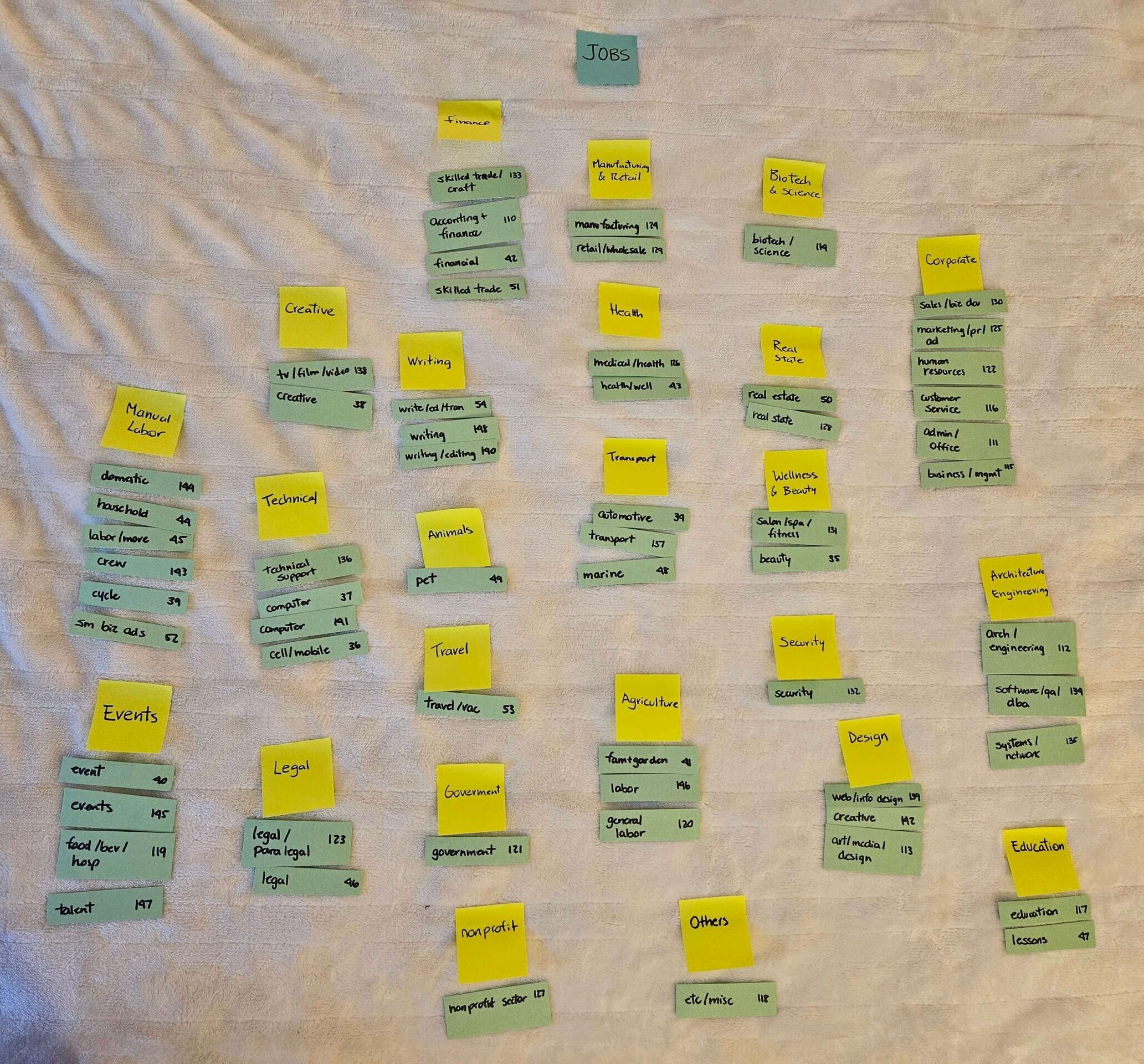
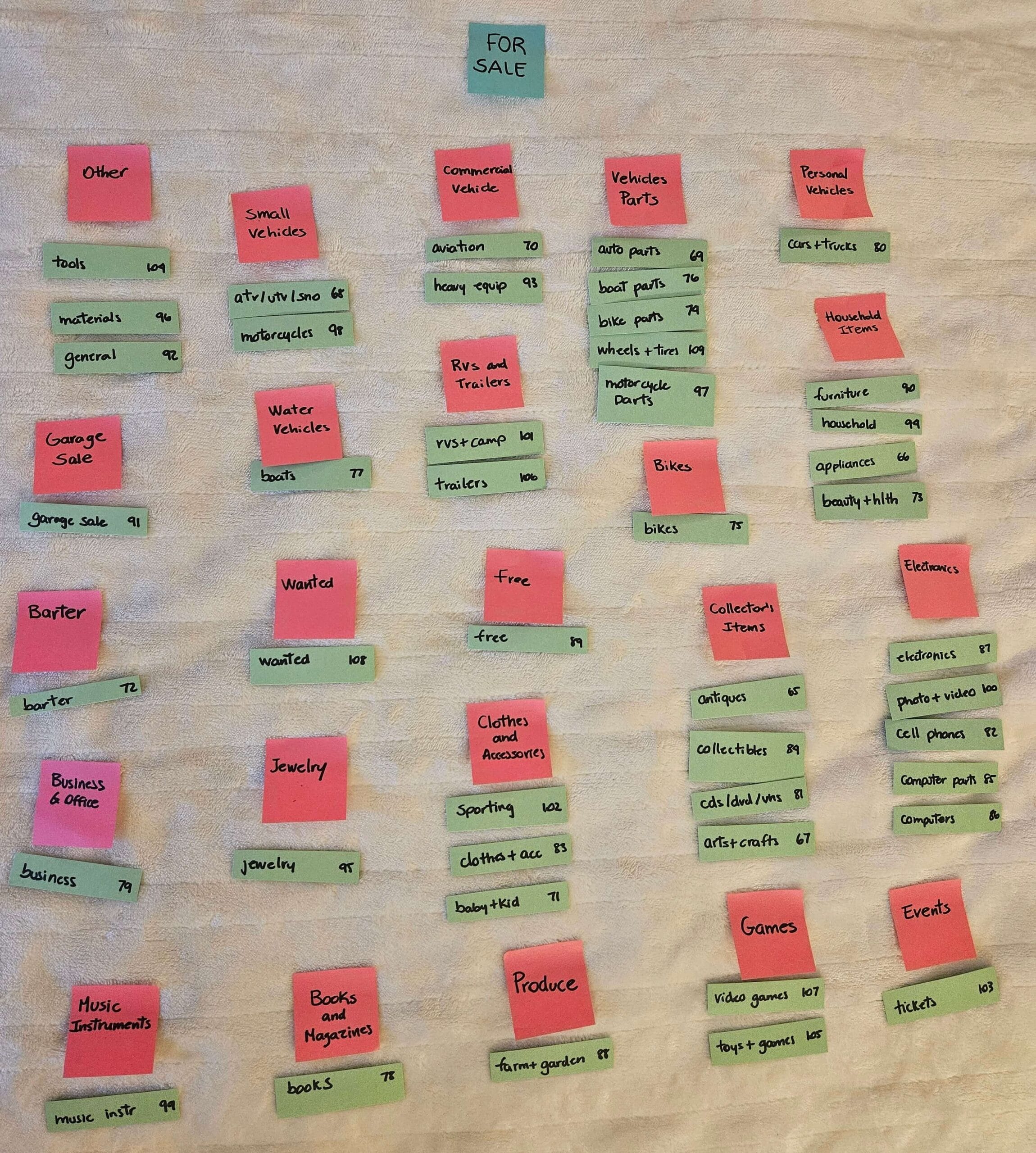
The process began by conducting a card sorting exercise of the current AI of cragislist. 10 users, ranging in age from 20 to 50 were tasked with sorting a total of 252 labels. This exercise helped me to gain valuable insights into how users categorize information.
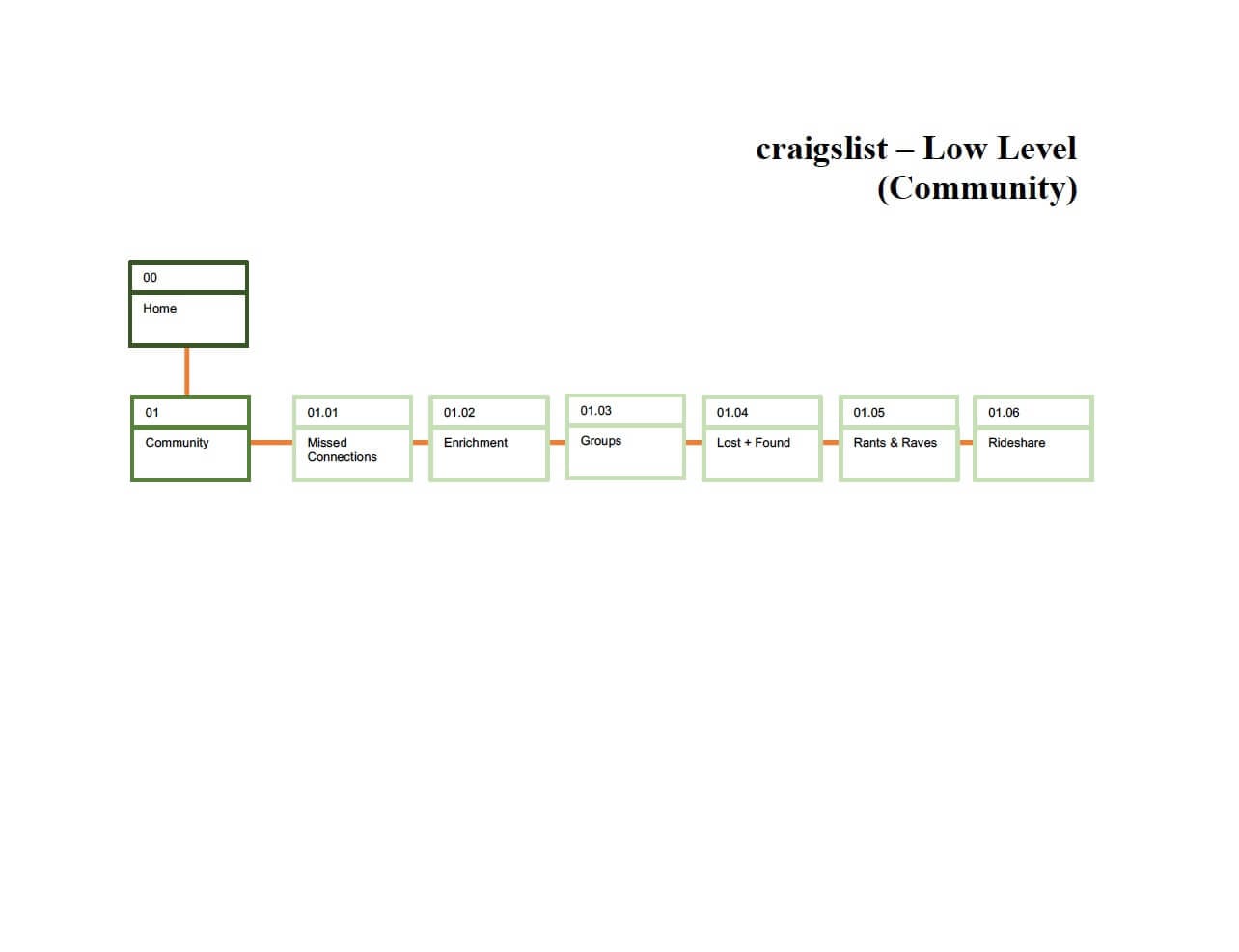
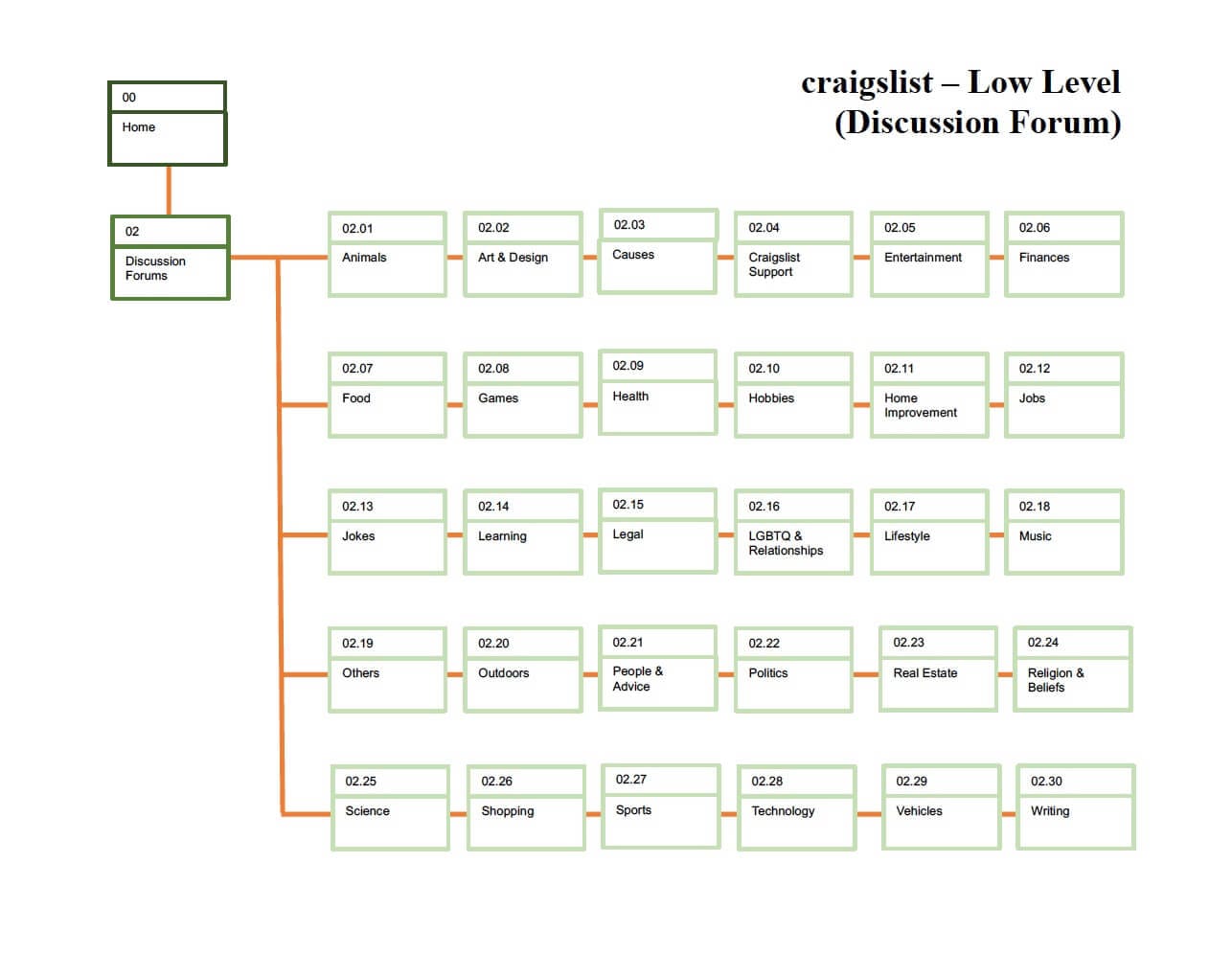
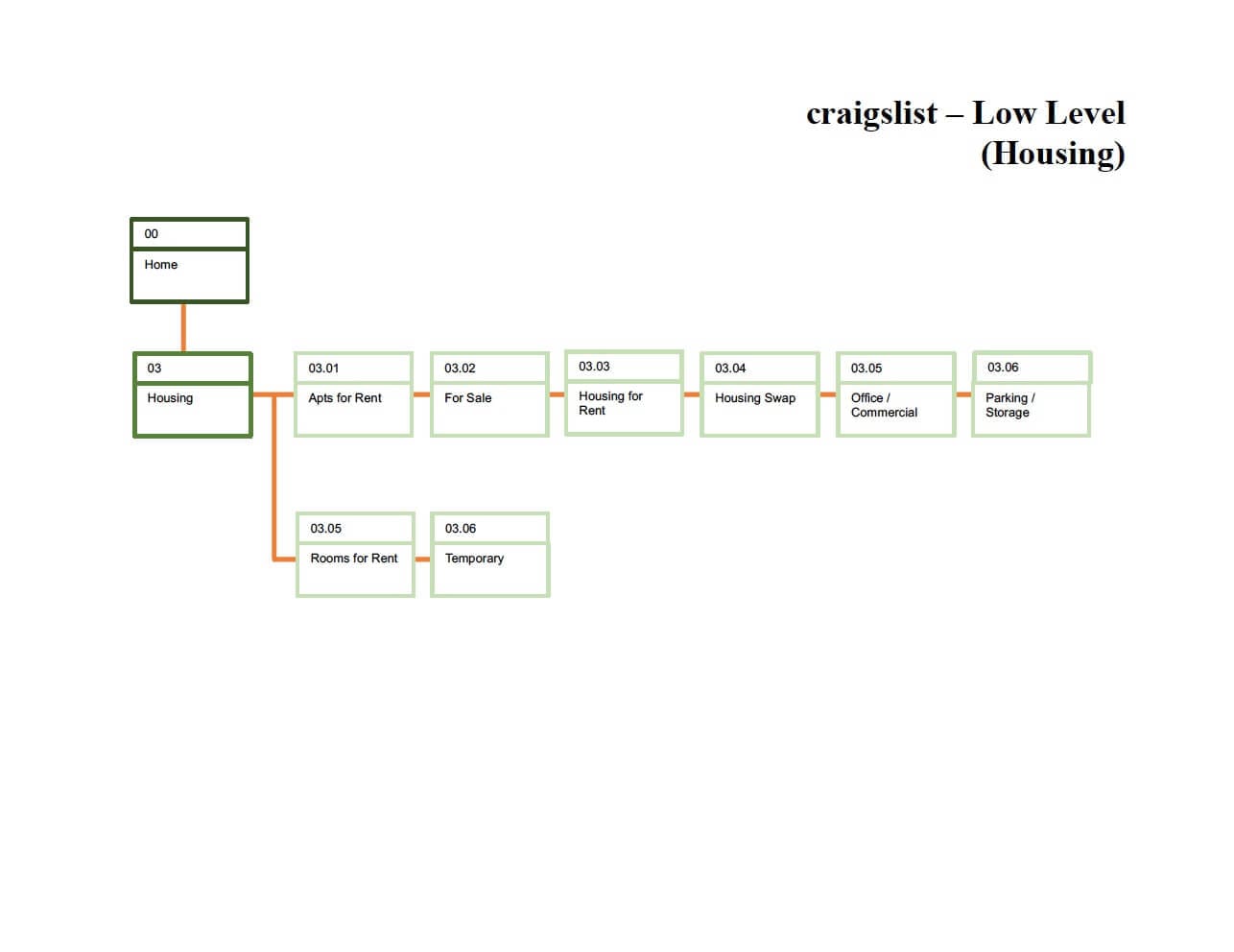
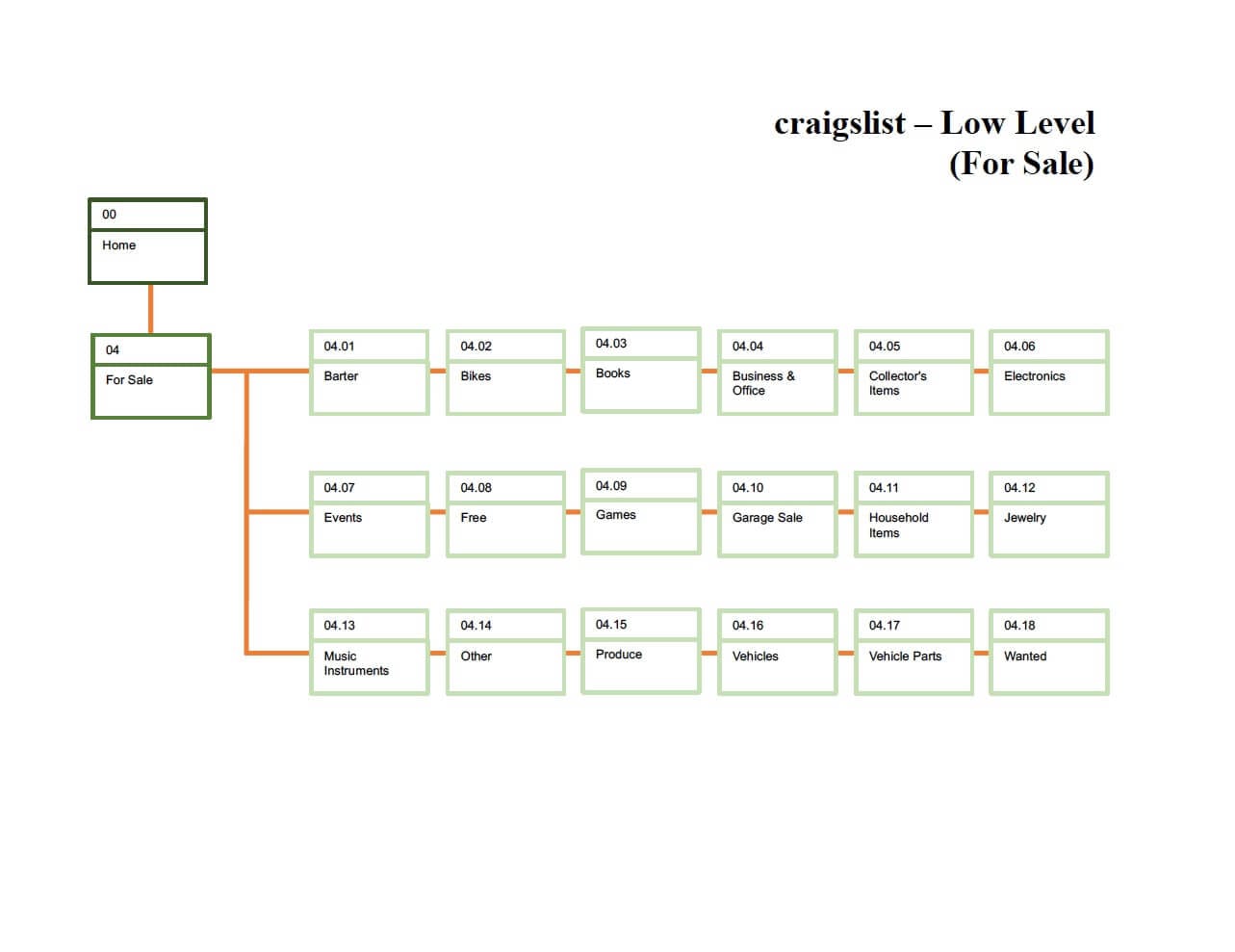
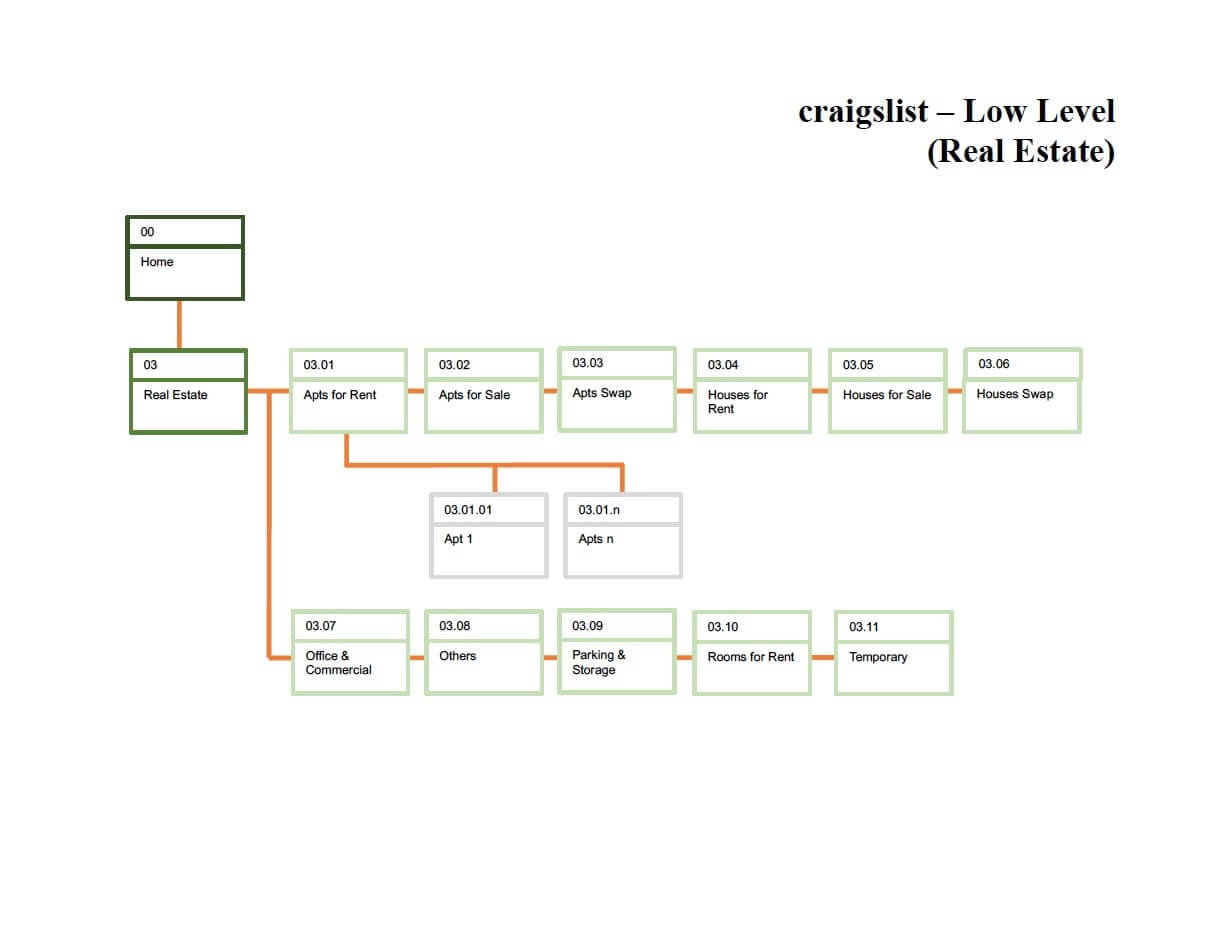
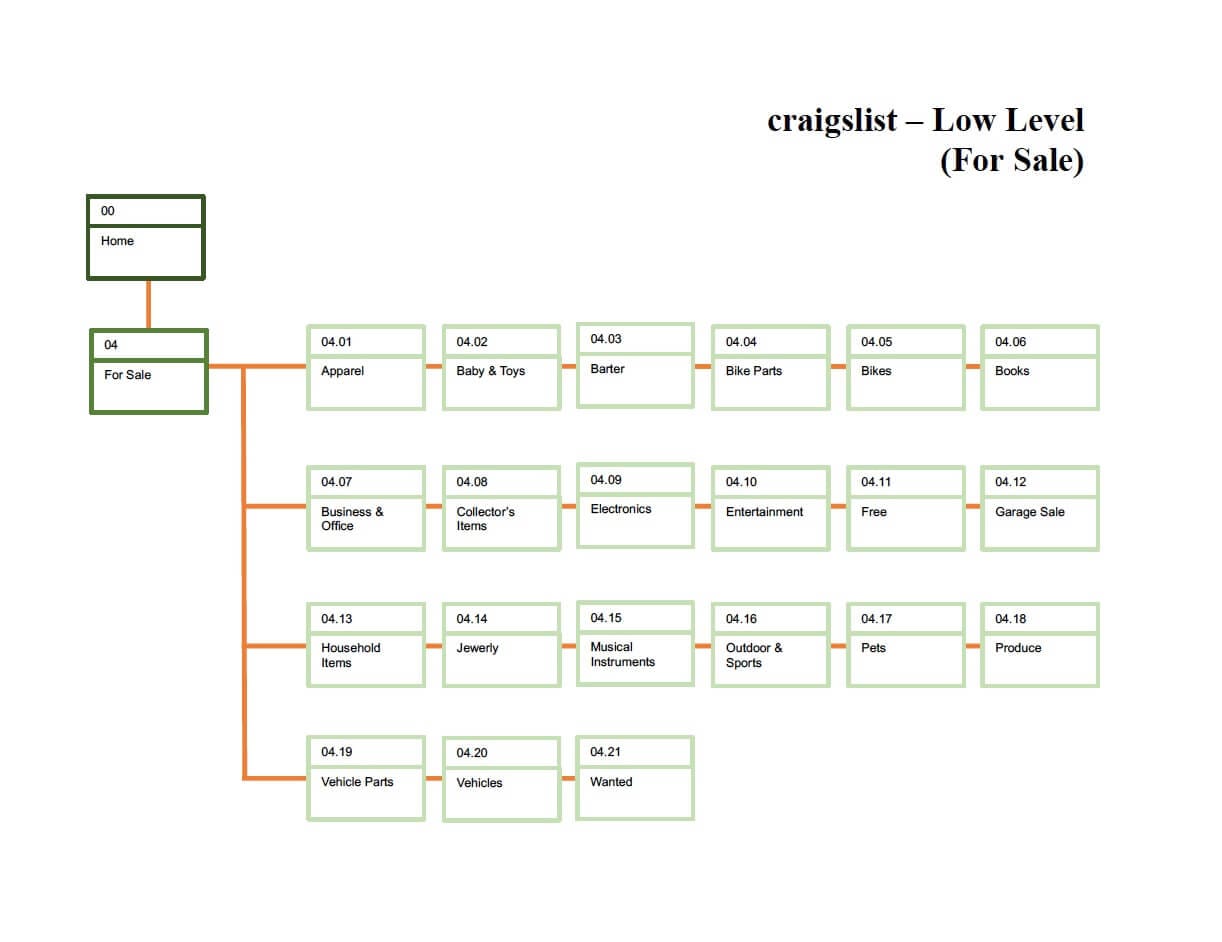
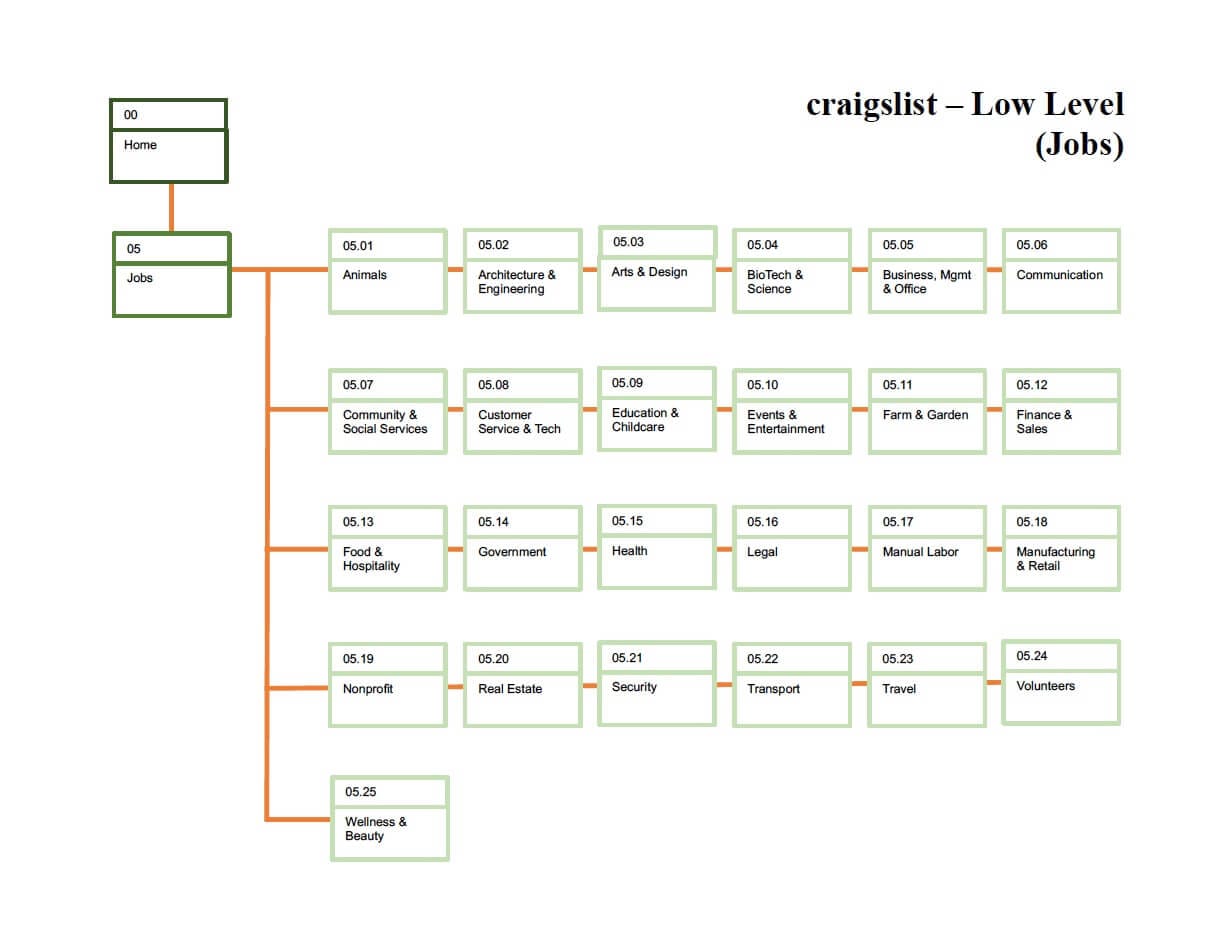
Craigslist is a complex website with a diverse range of categories that cater to various user needs. To improve its organization, the card sorting exercise was divided into six main categories: Home, Community, Discussion Forum, Housing, For Sale, and Jobs.
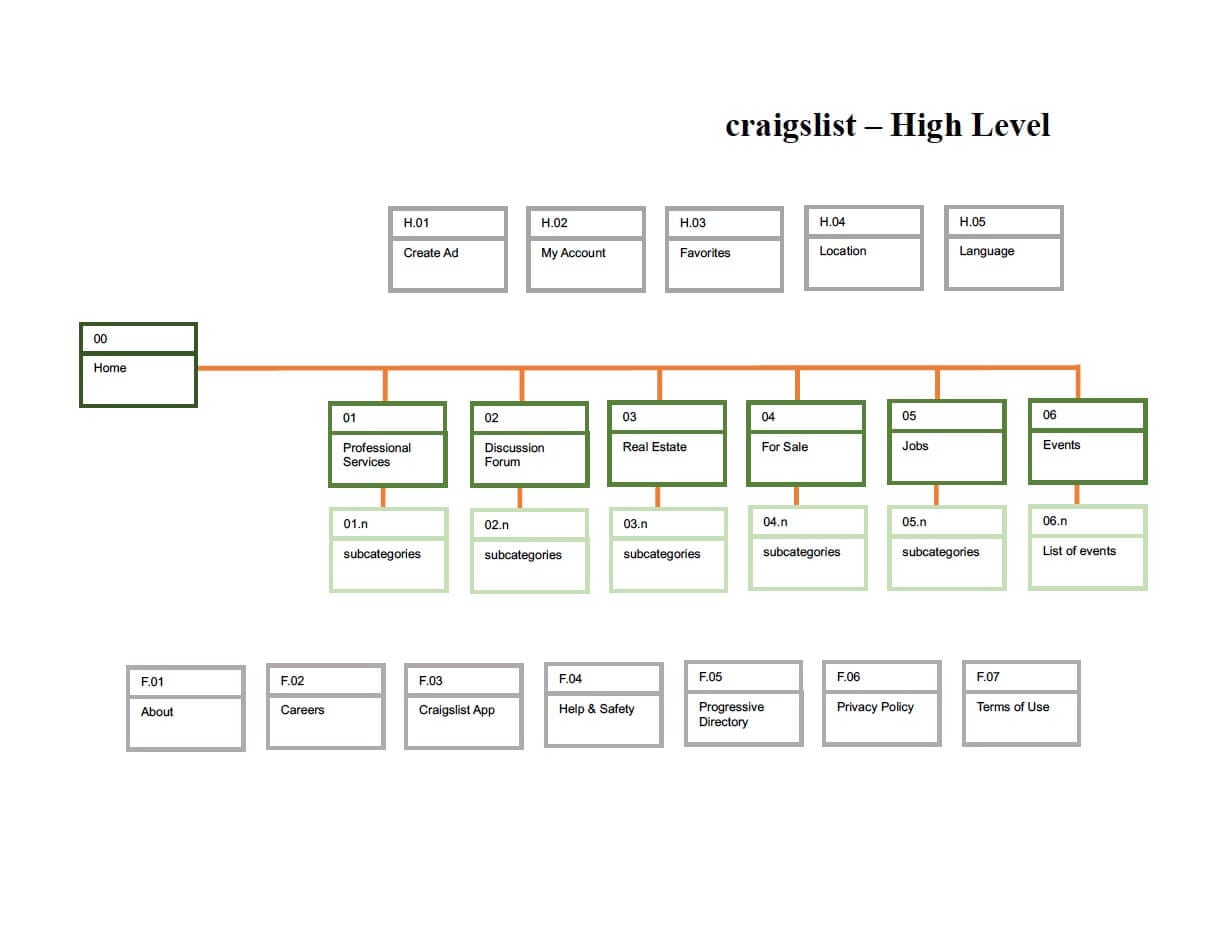
This is the first draft of the new Abstract IA. Labels were reduced from 252 to 110. This restructuring aims to simplify navigation and improve the overall user experience by making the categories more intuitive and manageable.
Refine, Validate & Design
Upadated IA
The first draft of the new Abstract IA was carefully analyzed to ensure all labels were well-known, easy to understand, relevant, brief, and representative of their content. Those that did not meet these parameters were modified as needed.
First, some labels were renamed. Housingwas renamed to Real Estate,Nearby CLtoLocation, andSafetytoHelp & Safety.
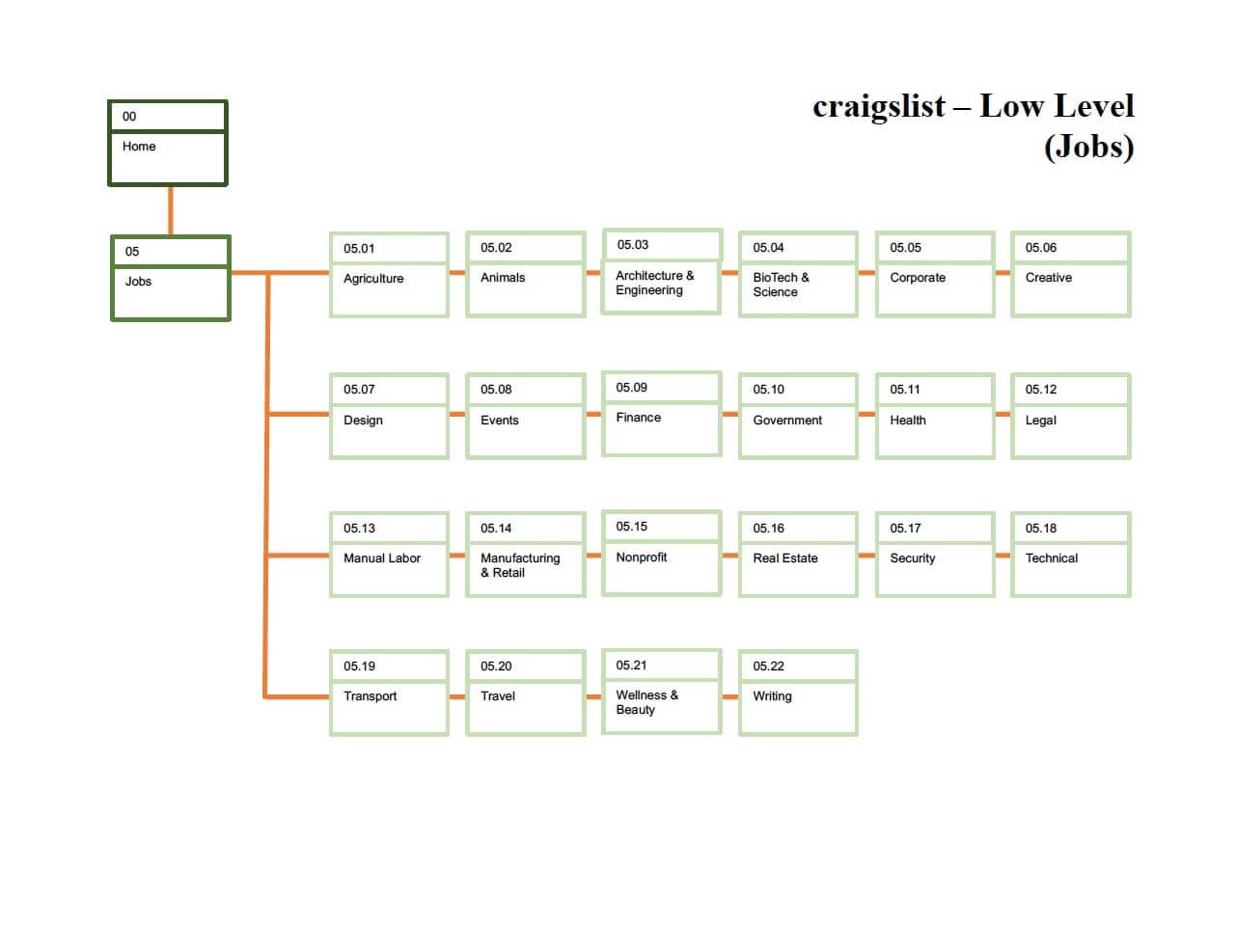
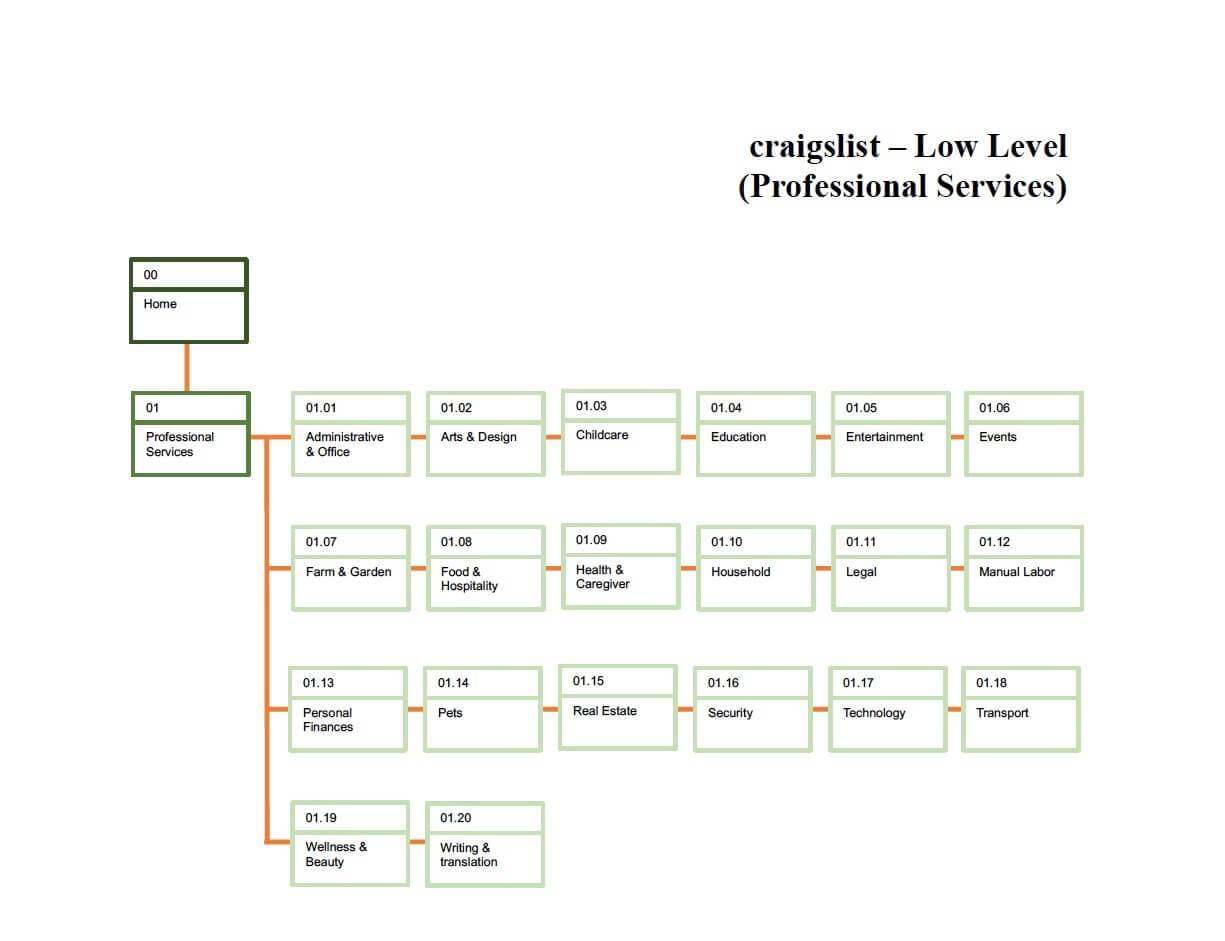
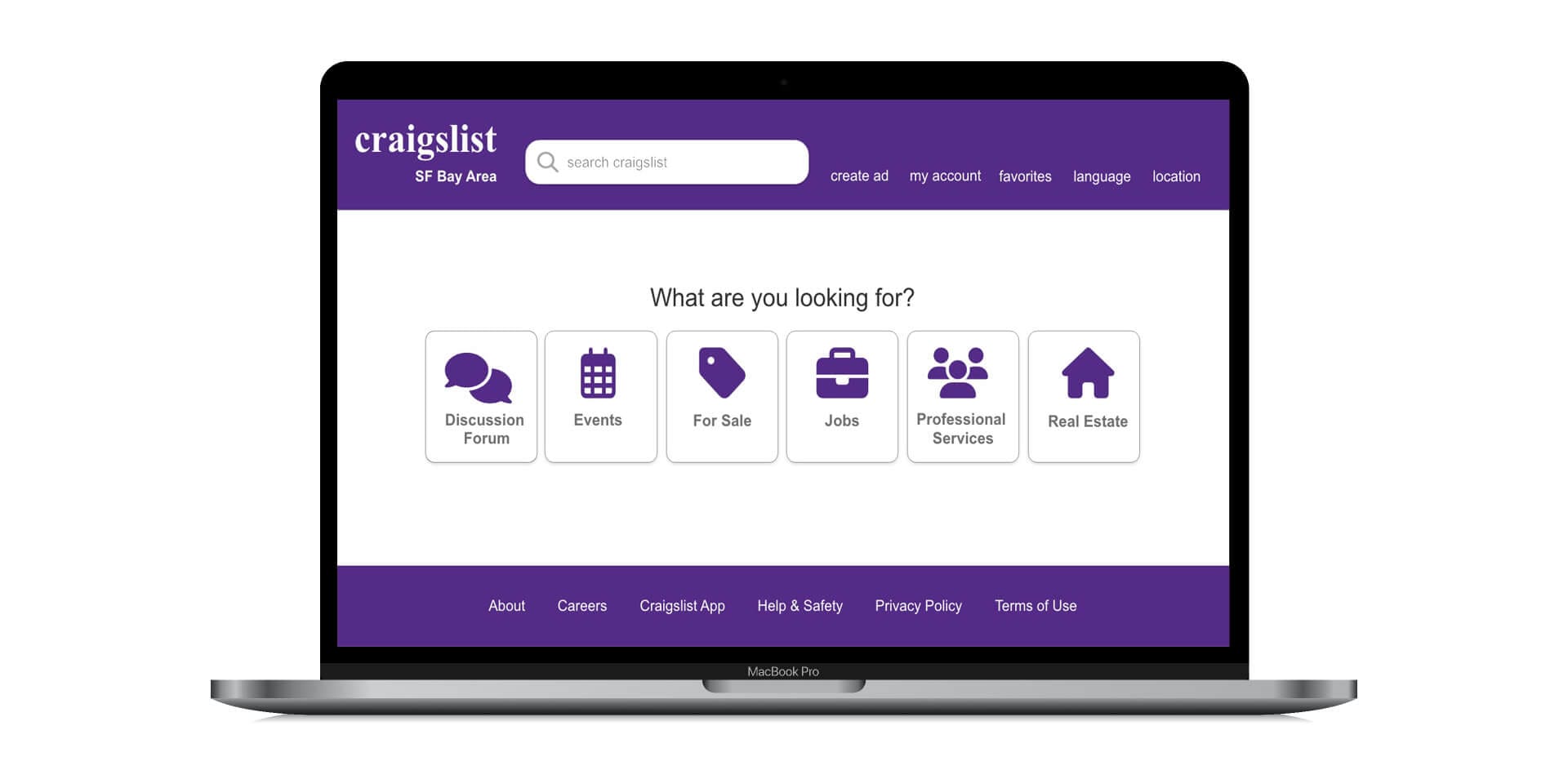
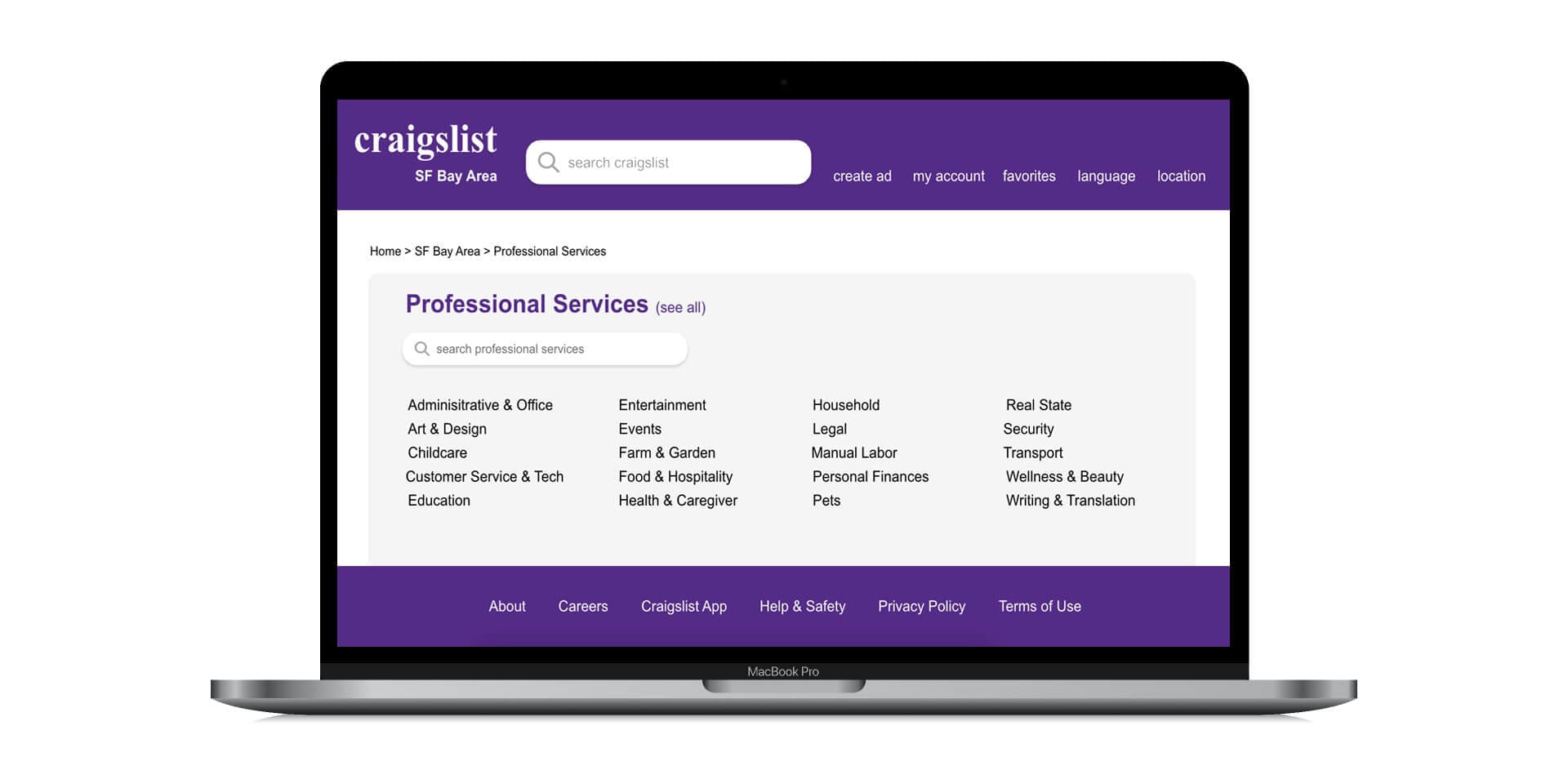
Second certain categories were reorganized for a better user experience. For instance, gigs, resumes, and services (previously under Jobs) were grouped together to form a new category called Professional Services. This new category streamlines the user experience by consolidating related offerings under one umbrella, making it easier for individuals and businesses to offer career-related solutions.
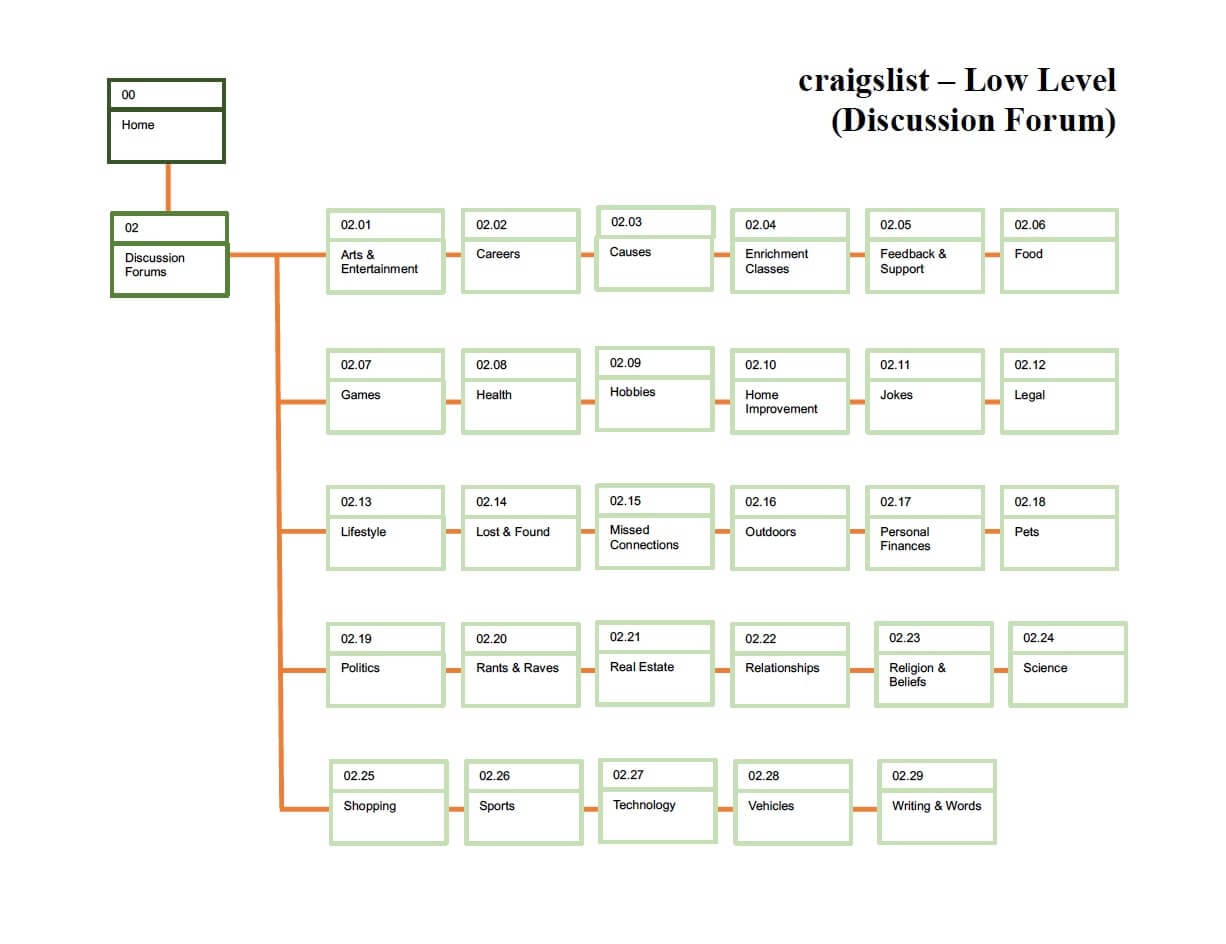
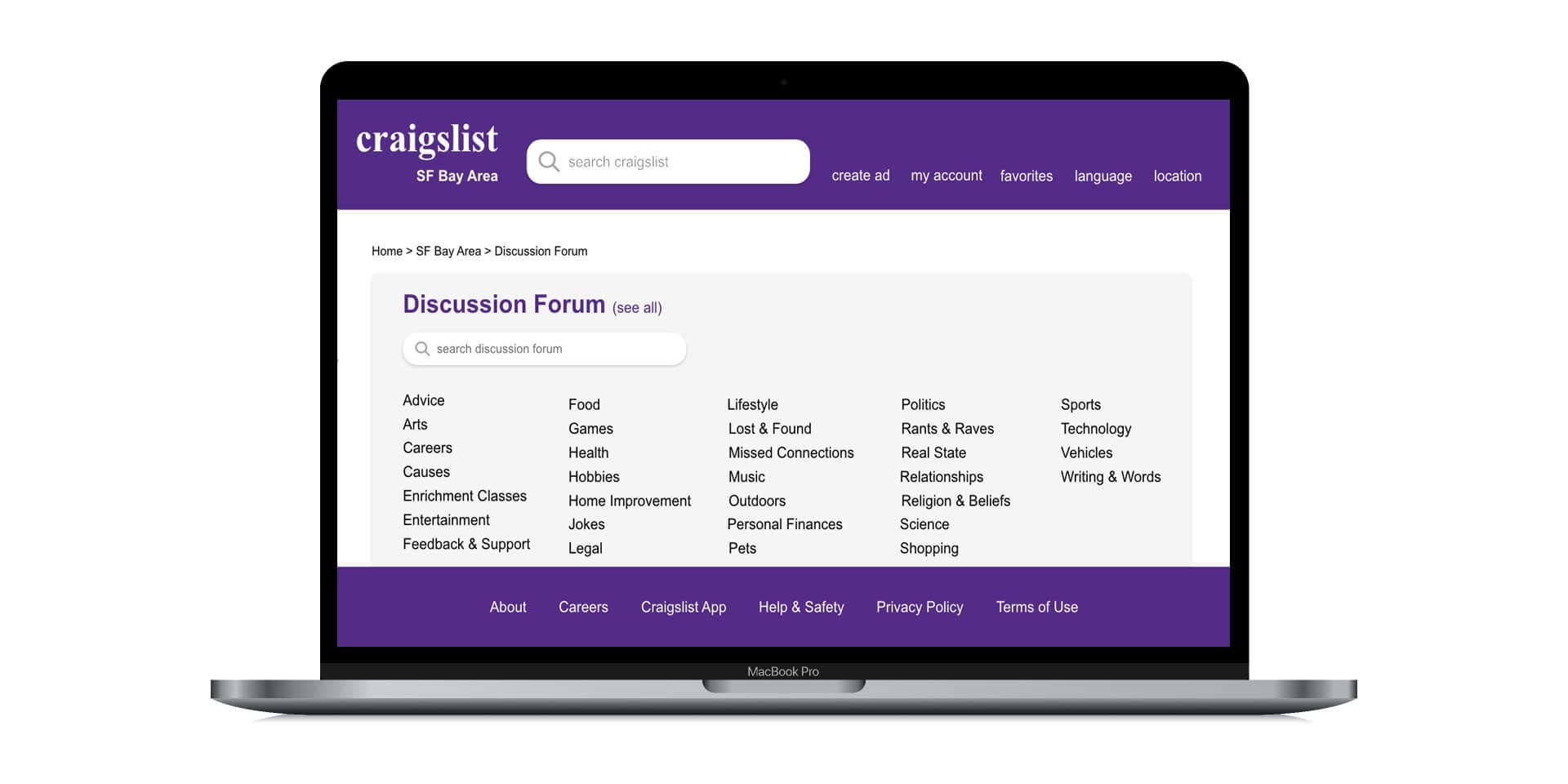
Finally, the community section was reorganized with some subcategories being moved to the Discussion Forum in an effort to make the navigation more intuitive for users.
Tree Testing (Updated IA)
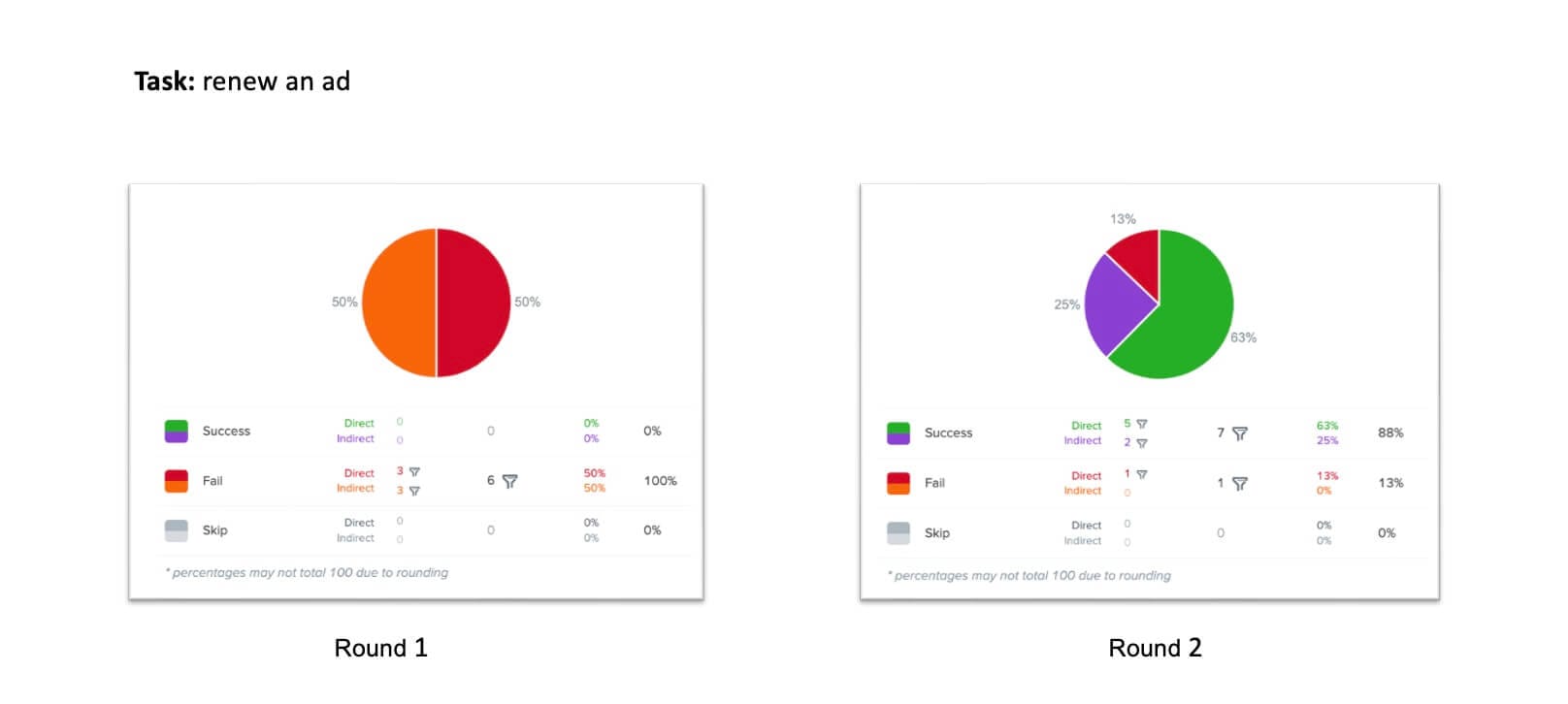
A second round of tree testing was conducted with the updated AI structure, where eight participants performed the same tasks. This time, the results showed notable improvements. A comparison between Round 1 and Round 2 demonstrates substantial usability gains following IA refinements. Success rates improved across most tasks—including multiple flows increasing from 0% to as high as 88%—while overall scores shifted from predominantly 1–3/10 to consistent 6–8/10 performance. Directness strengthened in key journeys, and time-on-task decreased significantly in complex flows (e.g., 32.83s to 20.50s; 23.59s to 9.50s), indicating clearer navigation and stronger alignment with user mental models. While a few tasks still present optimization opportunities, the second round validates that the structural changes meaningfully improved efficiency, clarity, and task completion.
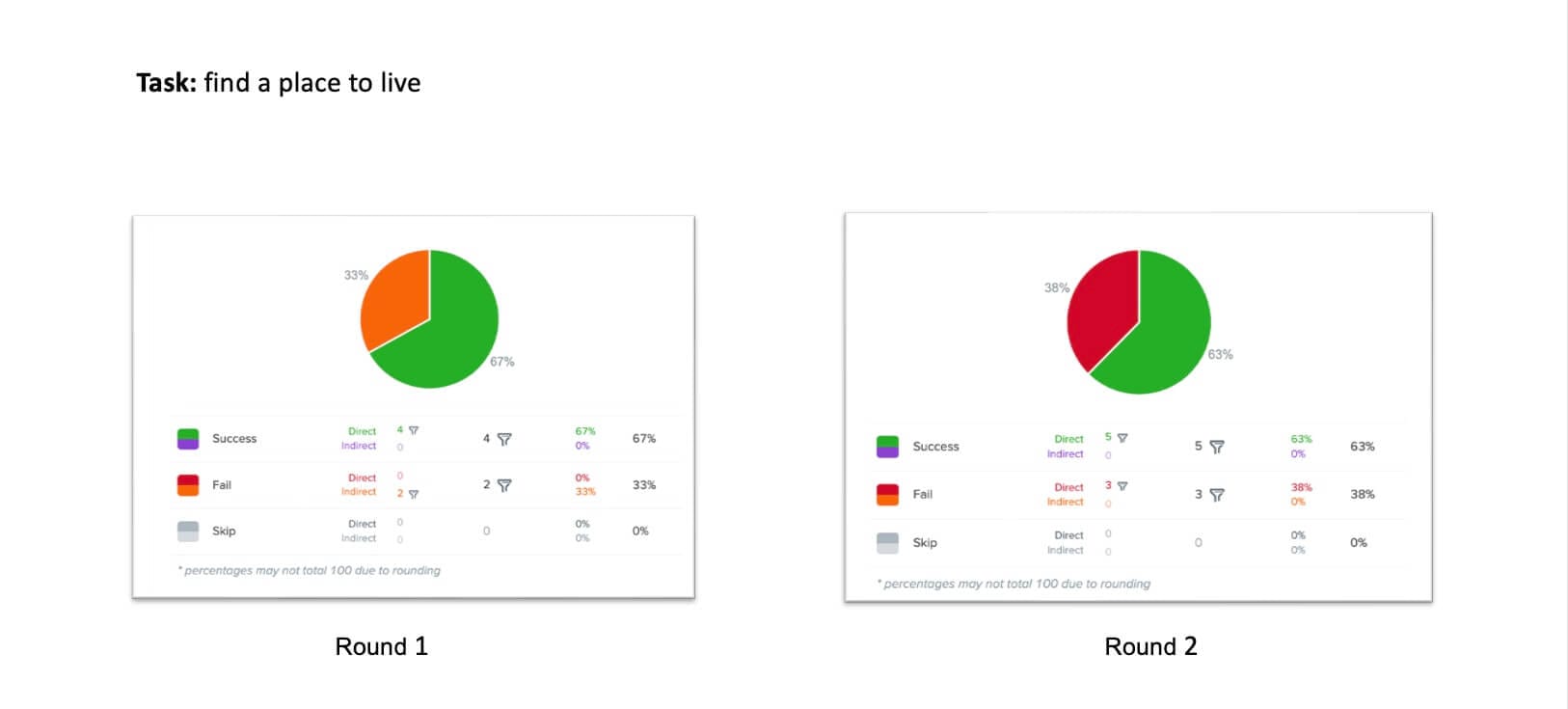
Round 2 shows clearer navigation but mixed outcomes. While success dipped slightly (67% → 63%) and time increased marginally, directness improved to 100%, eliminating detours and boosting the overall score from 5/10 to 8/10. Next step: refine labeling and filters to convert confident paths into higher completion rates.
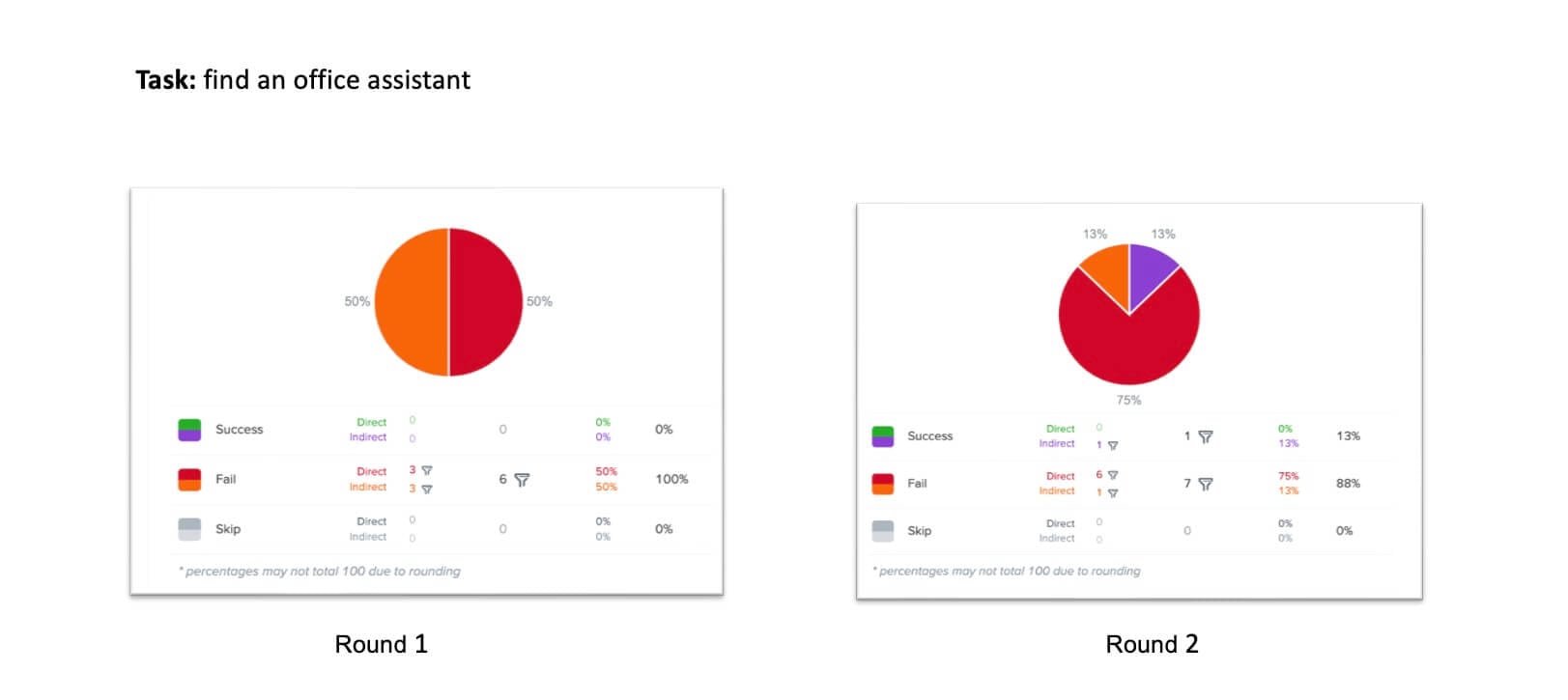
Round 2 shows early recovery from a critical IA failure. Success improved (0% → 13%), directness increased (50% → 75%), and time dropped, lifting the score from 1/10 to 4/10. Progress is clear—but job listings remain hard to find. Next: rethink labeling and category placement to match user expectations.
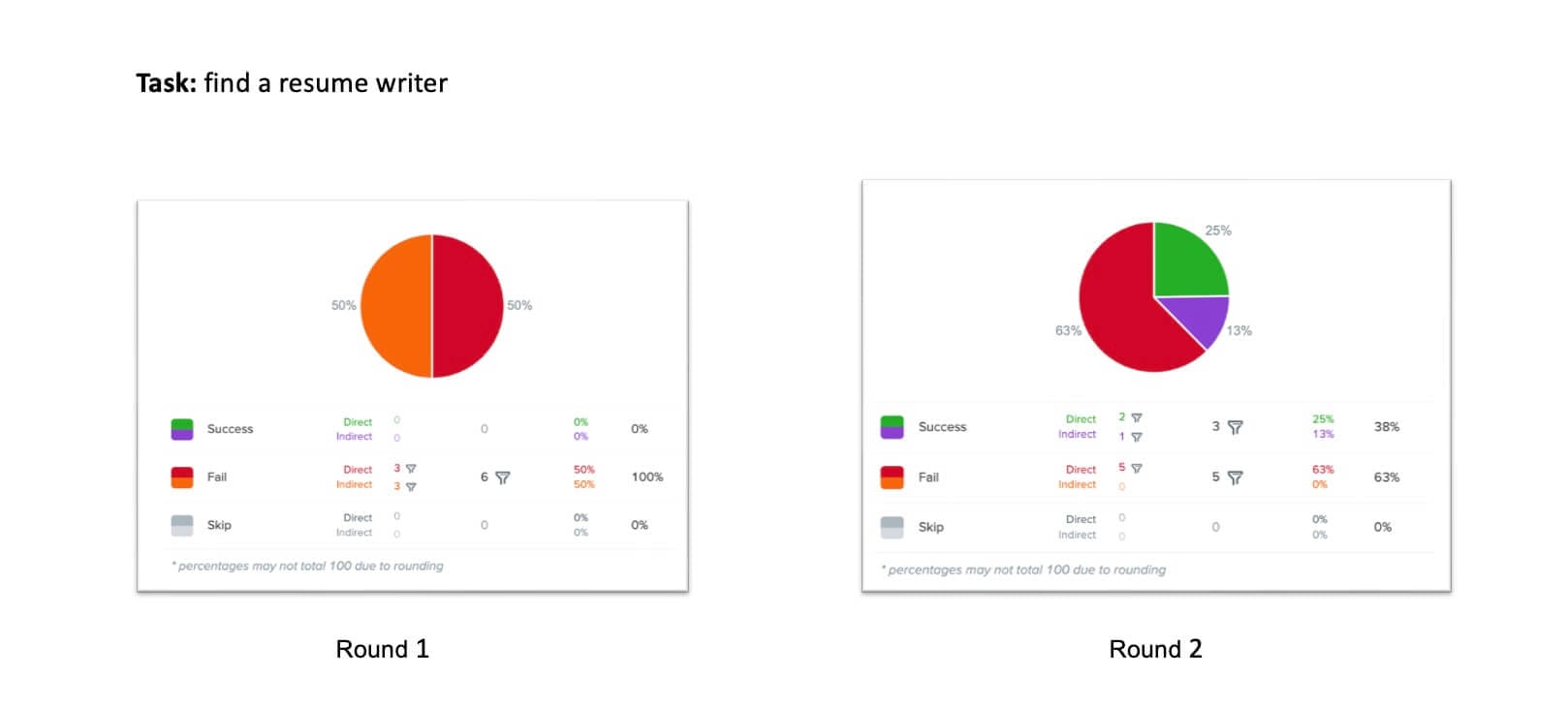
Round 2 transformed a dead end into meaningful progress. Success jumped from 0% to 38%, directness rose to 88%, and task time dropped significantly—boosting the score from 1/10 to 6/10. Clear improvement, but discoverability still needs refinement through stronger labeling and better service categorization.
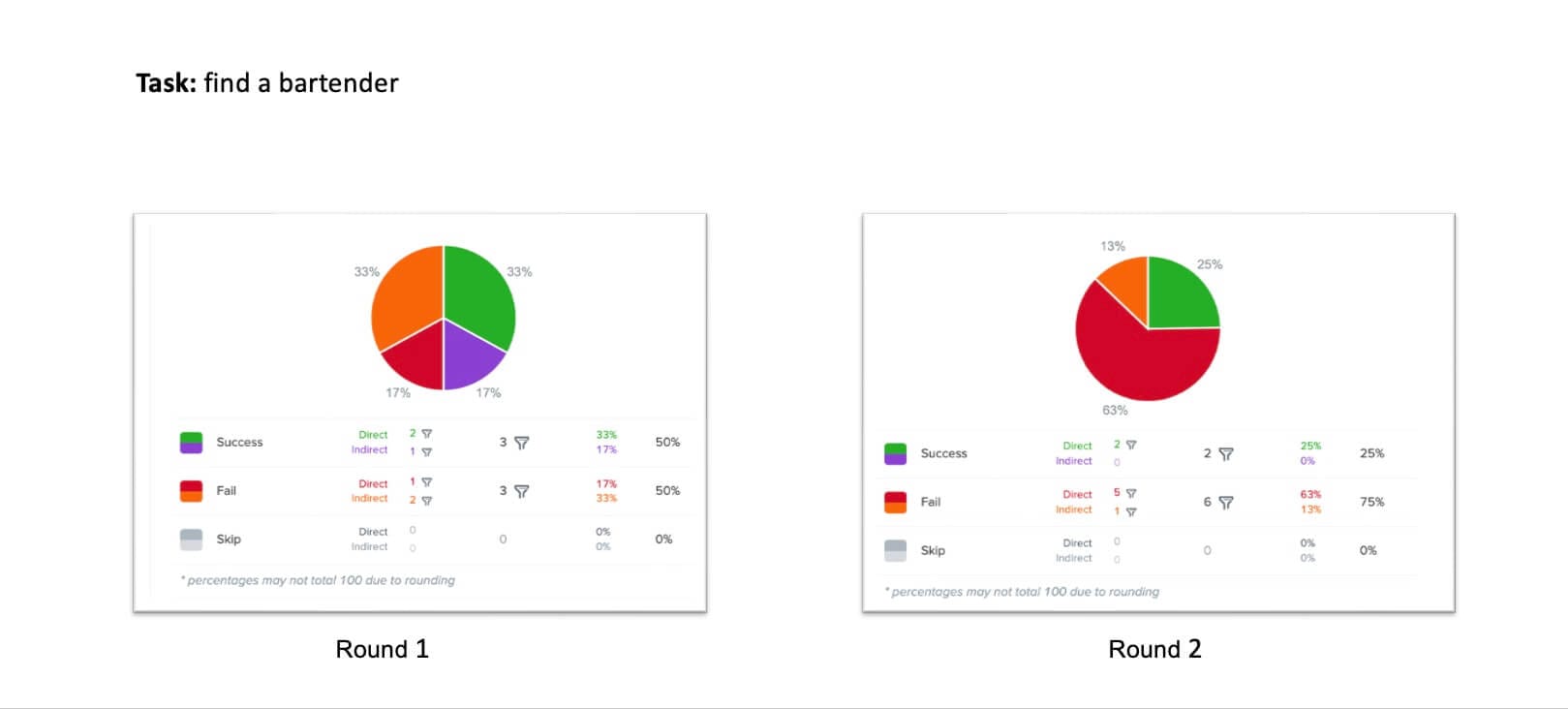
Round 2 improved clarity but hurt outcomes. Directness rose sharply (50% → 88%) and the score improved to 5/10, yet success dropped (50% → 25%) and time increased. Users followed clearer paths—but to the wrong place. Next: rethink category logic and labeling to align with mental models.
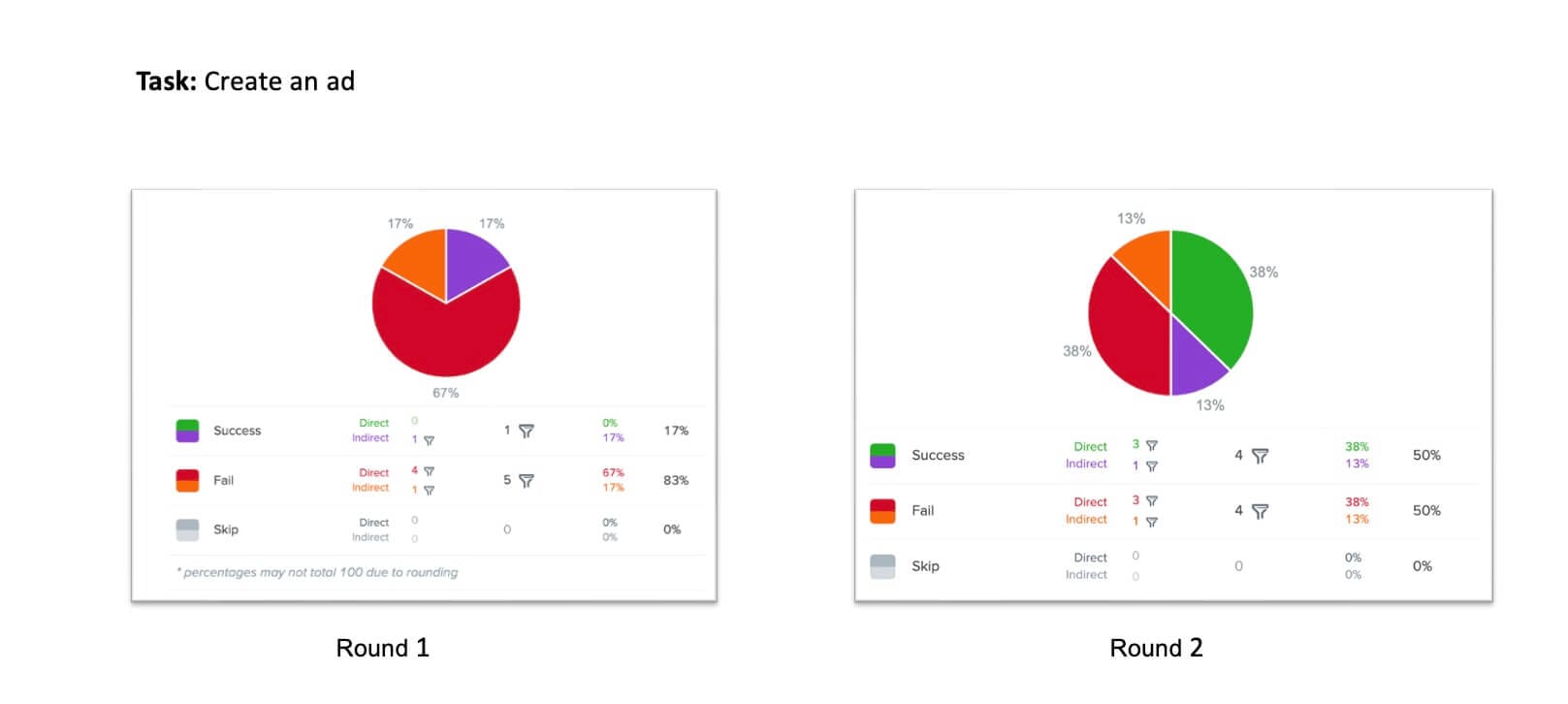
Round 2 delivered measurable gains: success climbed from 17% to 50%, directness improved, and completion time dropped—raising the score from 2/10 to 6/10. The flow is clearer and faster. Next step: strengthen employer-focused labeling and visibility to further increase completion and confidence.
Round 2 was a breakthrough. Success surged from 0% to 88%, task time dropped by more than half, and the overall score jumped from 3/10 to 8/10. What was once invisible is now intuitive. Next: fine-tune labeling and placement to maintain clarity and drive near-perfect completion.
Round 2 delivered marginal improvement: success rose slightly (33% → 38%) and time decreased, lifting the score from 2/10 to 3/10. However, directness dropped, signaling confusion in the reporting path. Next: simplify visibility and reposition the flag action to align with user expectations.
Round 2 unlocked clarity. Success improved from 0% to 25%, directness reached 100%, and time decreased—raising the score from 2/10 to 6/10. Users now take the right path quickly. Next: increase visibility and strengthen icon labeling to convert clarity into higher completion rates.
Round 2 delivered strong gains: success jumped from 50% to 88%, directness improved, and time dropped by nearly four seconds—boosting the score from 3/10 to 8/10. Favorites are now easy to find. Next: enhance visibility and cues to drive consistent, near-universal completion.
Round 2 turned failure into success. Completion surged from 0% to 88%, time dropped by more than half, and the score leapt from 1/10 to 8/10. Reposting is now intuitive. Next: refine placement and microcopy to boost directness and make the action unmistakable.
Round 2 shows clearer navigation but mixed outcomes. While success dipped slightly (67% → 63%) and time increased marginally, directness improved to 100%, eliminating detours and boosting the overall score from 5/10 to 8/10. Next step: refine labeling and filters to convert confident paths into higher completion rates.
Round 2 shows early recovery from a critical IA failure. Success improved (0% → 13%), directness increased (50% → 75%), and time dropped, lifting the score from 1/10 to 4/10. Progress is clear—but job listings remain hard to find. Next: rethink labeling and category placement to match user expectations.
Round 2 transformed a dead end into meaningful progress. Success jumped from 0% to 38%, directness rose to 88%, and task time dropped significantly—boosting the score from 1/10 to 6/10. Clear improvement, but discoverability still needs refinement through stronger labeling and better service categorization.
Round 2 improved clarity but hurt outcomes. Directness rose sharply (50% → 88%) and the score improved to 5/10, yet success dropped (50% → 25%) and time increased. Users followed clearer paths—but to the wrong place. Next: rethink category logic and labeling to align with mental models.
Round 2 delivered measurable gains: success climbed from 17% to 50%, directness improved, and completion time dropped—raising the score from 2/10 to 6/10. The flow is clearer and faster. Next step: strengthen employer-focused labeling and visibility to further increase completion and confidence.
Round 2 was a breakthrough. Success surged from 0% to 88%, task time dropped by more than half, and the overall score jumped from 3/10 to 8/10. What was once invisible is now intuitive. Next: fine-tune labeling and placement to maintain clarity and drive near-perfect completion.
Round 2 delivered marginal improvement: success rose slightly (33% → 38%) and time decreased, lifting the score from 2/10 to 3/10. However, directness dropped, signaling confusion in the reporting path. Next: simplify visibility and reposition the flag action to align with user expectations.
Round 2 unlocked clarity. Success improved from 0% to 25%, directness reached 100%, and time decreased—raising the score from 2/10 to 6/10. Users now take the right path quickly. Next: increase visibility and strengthen icon labeling to convert clarity into higher completion rates.
Round 2 delivered strong gains: success jumped from 50% to 88%, directness improved, and time dropped by nearly four seconds—boosting the score from 3/10 to 8/10. Favorites are now easy to find. Next: enhance visibility and cues to drive consistent, near-universal completion.
Round 2 turned failure into success. Completion surged from 0% to 88%, time dropped by more than half, and the score leapt from 1/10 to 8/10. Reposting is now intuitive. Next: refine placement and microcopy to boost directness and make the action unmistakable.
Success Score
Tree testing revealed clear friction points in the information architecture. Critical tasks like searching rentals (6%) and job listings (13%) showed severe discoverability gaps, while resume services (38%) and part-time gigs (25%) signaled misaligned labeling. In contrast, preference settings and post-management tasks (88%) demonstrated intuitive structure—highlighting exactly where IA improvements are needed most.
Directness Score
Directness scores showed that when users knew where to go, they navigated confidently—housing rentals and marking favorites achieved 100% direct paths. Most tasks ranged between 75–88%, signaling generally logical structure. However, flagging a post (33%) exposed confusion, revealing specific navigation breakdowns despite otherwise strong IA alignment.
Time Taken Score
Time Taken data revealed a clear usability divide. Core discovery tasks like rentals (31s), part-time gigs (28s), and flagging a post (35s) required significantly more effort, signaling friction and uncertainty. In contrast, preference settings and post interactions (4–9s) were completed quickly—confirming stronger clarity and intuitive navigation in those areas.
Overall Score
Overall scores highlight a polarized experience. Core flows like preferences, reposting, and housing rentals performed strongly (8/10), while job search (4/10) and flagging (3/10) revealed critical usability gaps. Mid-range tasks (5–6/10) suggest partial clarity—confirming where the IA works and where strategic restructuring is needed to elevate performance.
Actionable Next Steps
Based on these findings, high-friction discovery flows would be restructured by refining labels, reassessing category placement, and realigning navigation with user mental models through card sorting and terminology testing. Improvements would then be validated through an additional round of tree testing, with iterative refinements conducted until success rates, directness, and efficiency meet usability benchmarks.
Design
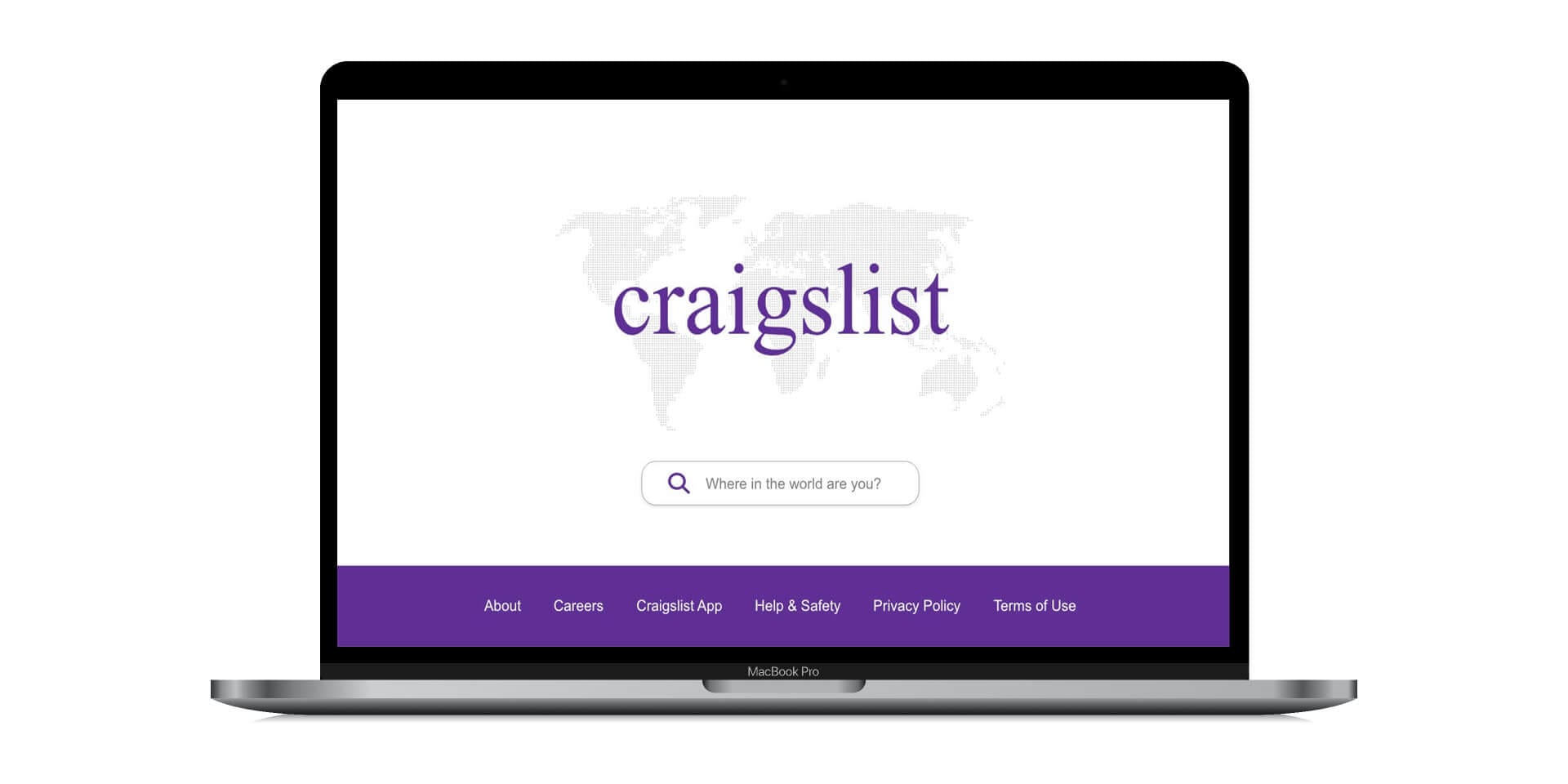
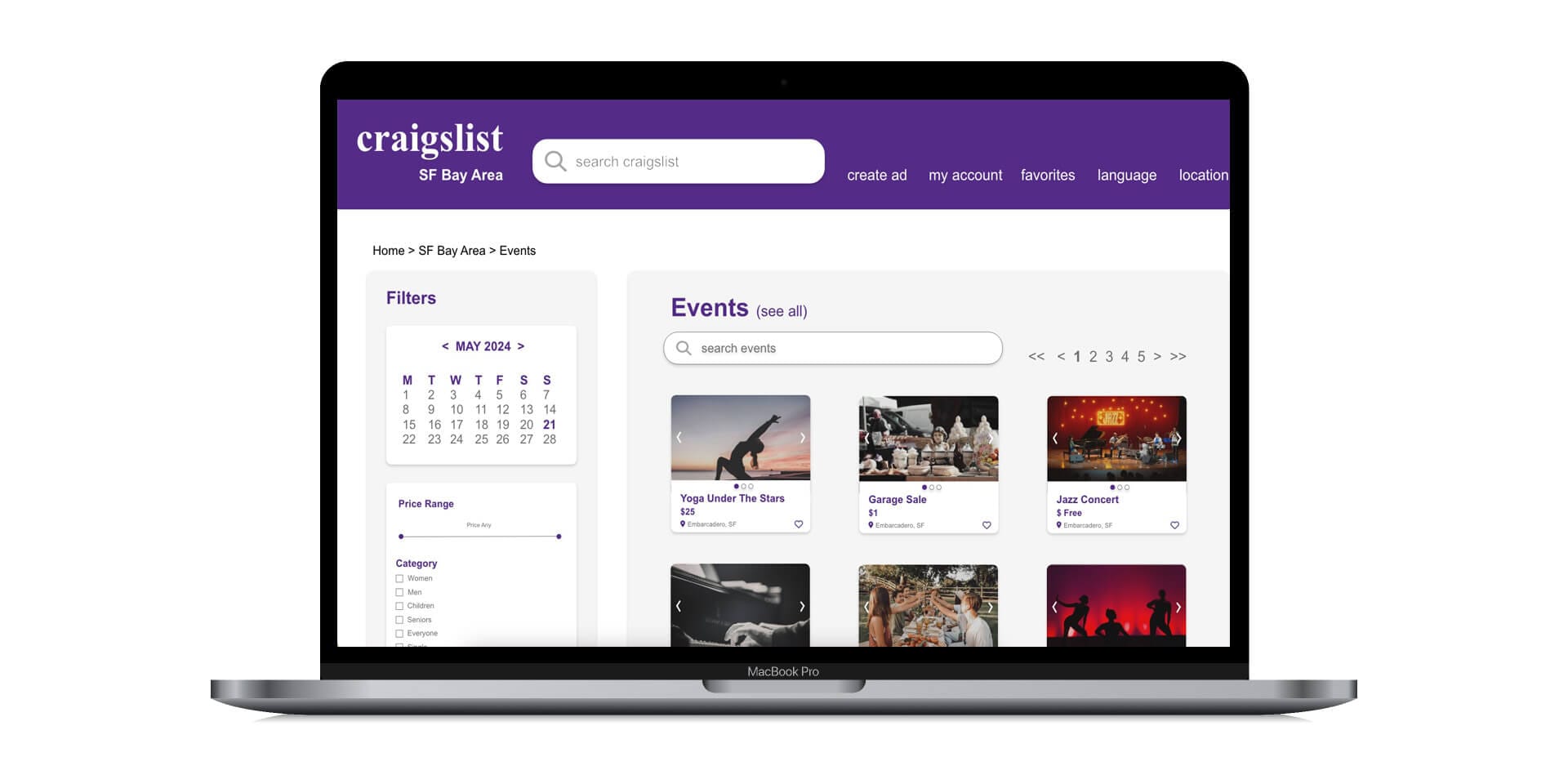
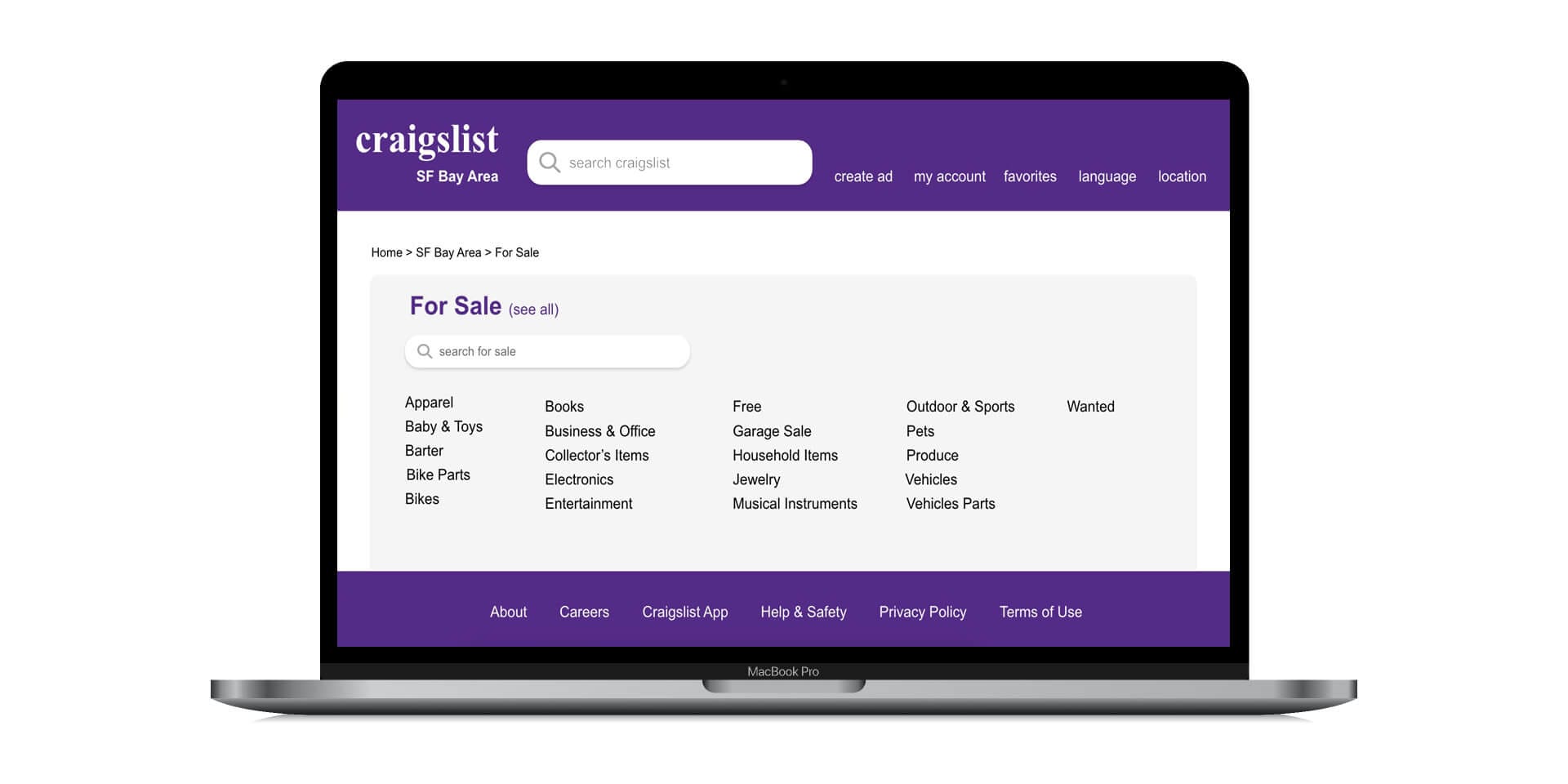
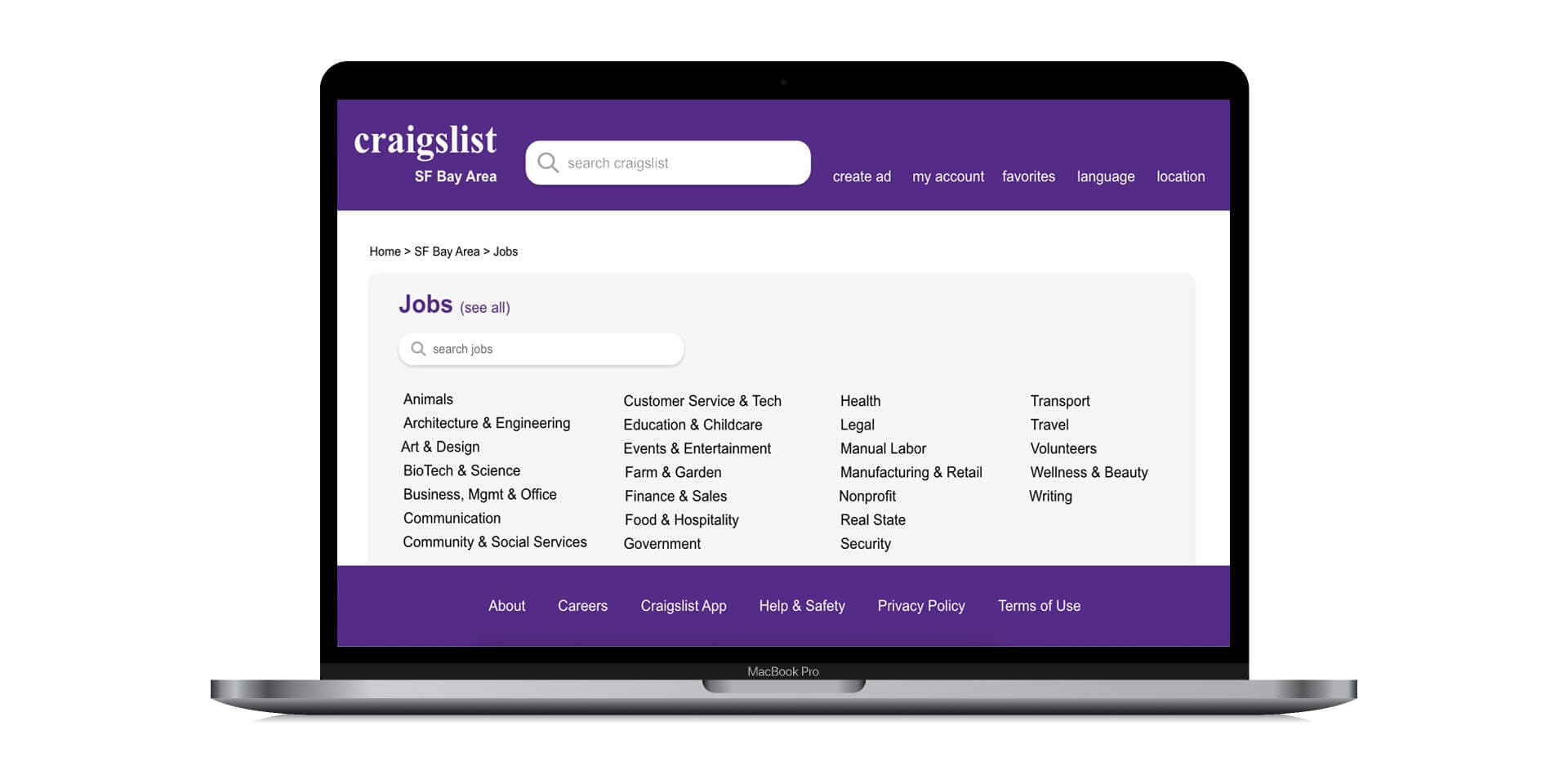
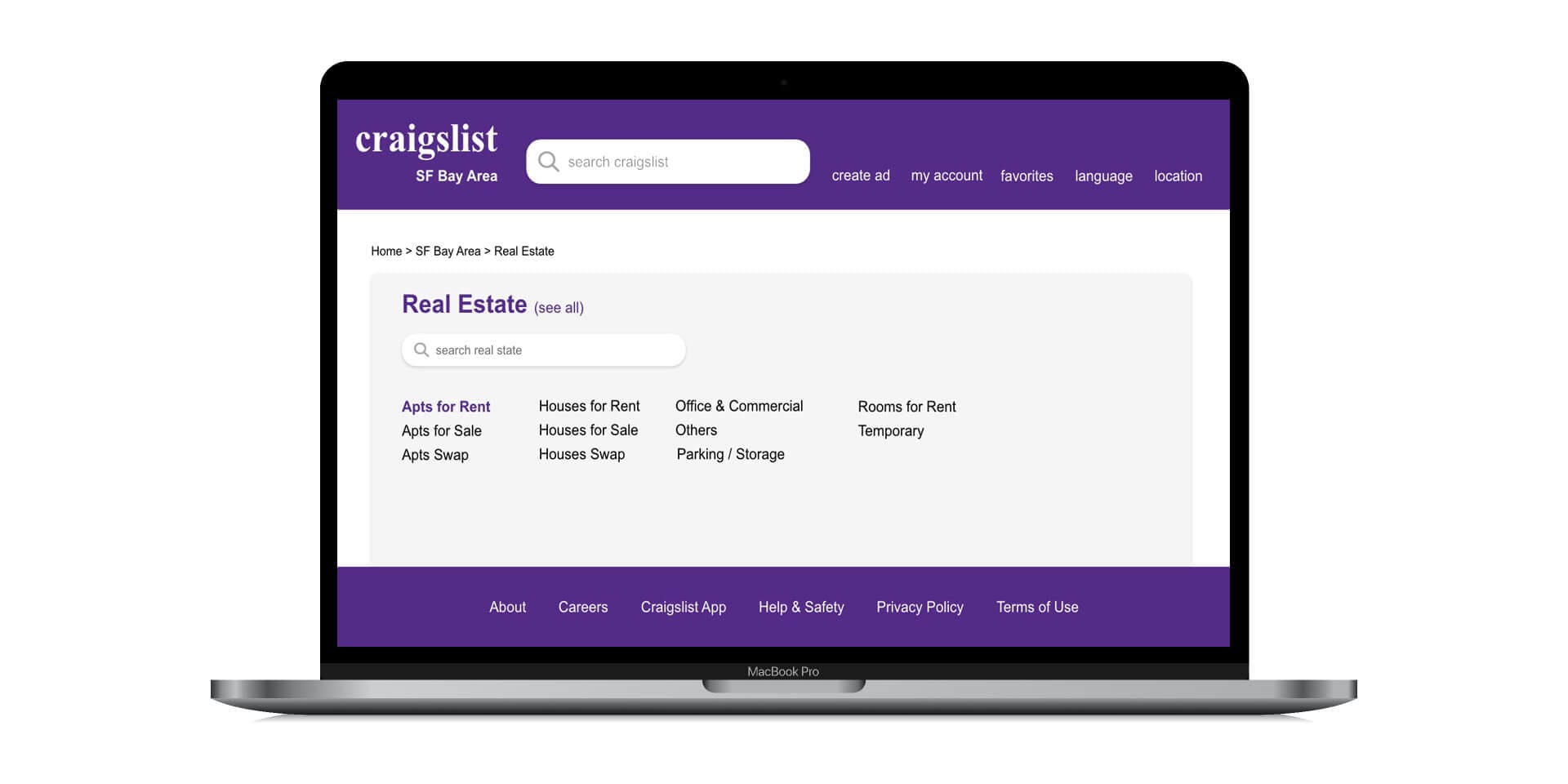
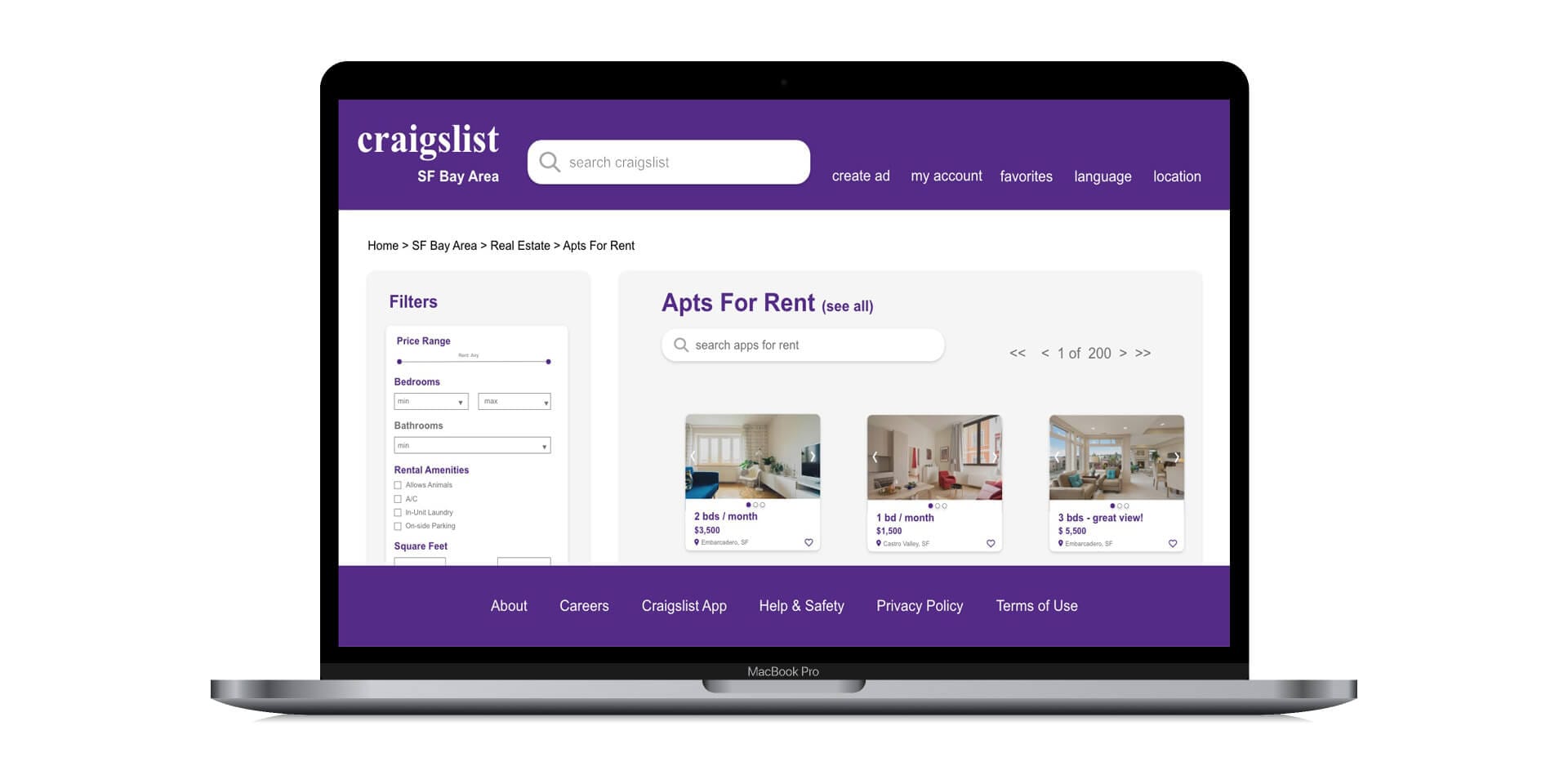
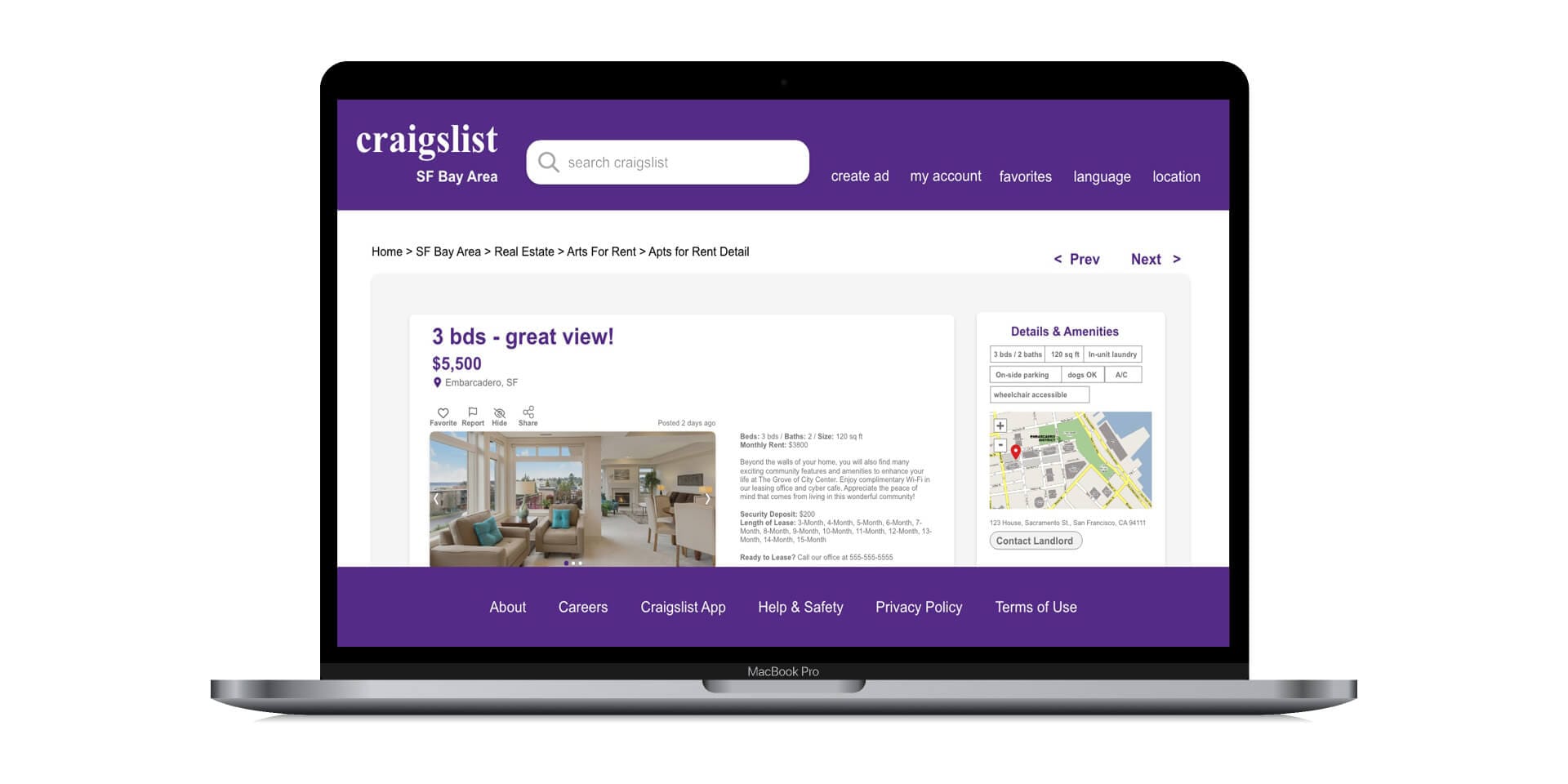
Based on the new IA, I created wireframes for each main page. Craigslist follows a top-down approach, where a basic structure is displayed initially and becomes more refined with each subsequent click. This approach ensures that users are gradually introduced to the content and features, providing a clear and streamlined navigation experience.